Maternidad / Motherhood
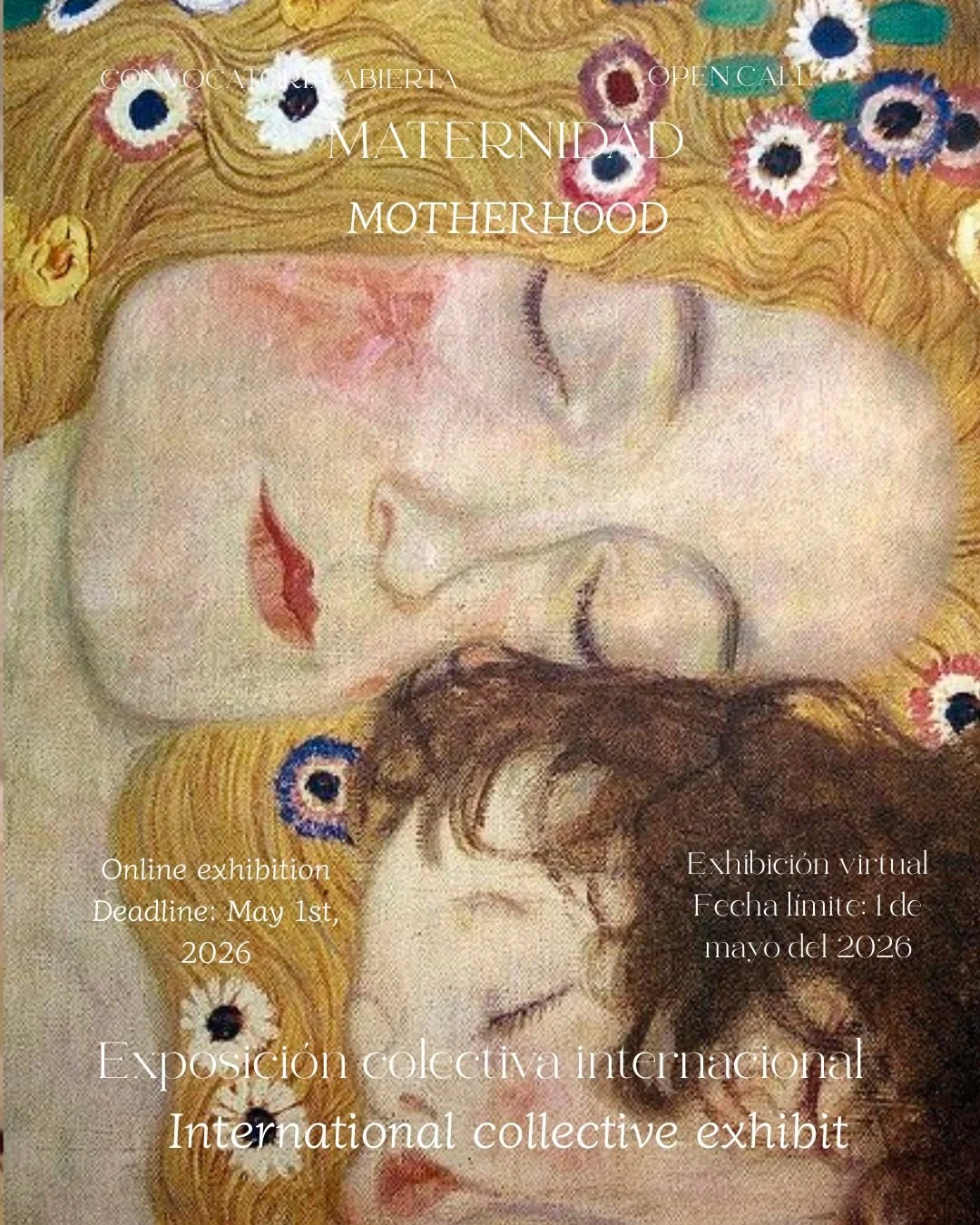
Motherhood and the archetype of “The Mother” have been represented in art for centuries. In its earliest depictions —fertility figures in antiquity and later images of the Virgin Mary with the Christ child in religious art— motherhood was portrayed as a magical experience of care, love, and self-sacrifice, and the Mother as virgin, muse, and goddess: a perfect, ethereal, and immaculate figure.
During the Renaissance and up until the 18th century, these images persisted, although representations of mothers in aristocratic contexts began to emerge, where motherhood was linked to domestic virtue and social order.
Over time, motherhood began to be represented through a female gaze, shifting from an experience observed, edited, and interpreted from the outside to one lived and embodied. In the 19th century, with artists such as Mary Cassatt and Berthe Morisot, motherhood in art moved beyond idealization to depict everyday gestures —no less magical for their simplicity—: a mother sewing or breastfeeding her baby, a young girl looking at herself in the mirror beside her mother, and similar intimate scenes.
Photographers like Dorothea Lange captured the vulnerability of attempting motherhood in times of crisis. Painters such as Frida Kahlo opened a new territory: the pain of the impossibility of motherhood. Meanwhile, surrealist artists in Mexico —Leonora Carrington, Remedios Varo, and Sofía Bassi— expanded the collective imagination, shifting motherhood toward the symbolic, the oneiric, and the alchemical by representing it from an esoteric perspective: as a portal between dimensions, a gateway to transformation, manifestation, and creation. In recent decades, artists such as Alice Neel and Judy Chicago have explored motherhood through its physical, psychological, and political dimensions.
━
La maternidad y el arquetipo de “La Madre” han sido representados en el arte durante siglos. En sus primeras representaciones —las figuras de fertilidad en la antigüedad y, más tarde, las imágenes de la Virgen María con el niño Jesús en el arte religioso— la maternidad se mostraba como una experiencia mágica de cuidado, amor y autosacrificio, y a la Madre como virgen, musa y diosa: una figura perfecta, etérea e inmaculada.
Durante el Renacimiento y hasta el siglo XVIII, estas imágenes persistieron, aunque comenzaron a aparecer representaciones de madres en contextos aristocráticos, donde la maternidad se vinculaba con la virtud doméstica y el orden social.
Con el tiempo, la maternidad comenzó a ser representada desde una mirada femenina, pasando de ser una experiencia vista, editada e interpretada desde fuera, a una experiencia vivida y habitada en carne propia. En el siglo XIX, con artistas como Mary Cassatt y Berthe Morisot la maternidad en el arte dejó de ser únicamente un ideal para mostrar esos gestos cotidianos, pero no por eso menos mágicos: una madre cosiendo o amamantando a su bebé, una niña observándose al espejo junto con su mamá, etc.
Fotógrafas como Dorothea Lange capturan la vulnerabilidad de intentar ser madre en contextos de crisis. Pintoras como Frida Kahlo abren un territorio nuevo: el dolor de la imposibilidad de ser madre.A su vez, las surrealistas en México —Leonora Carrington, Remedios Varo y Sofía Bassi— expanden el imaginario colectivo y desplazan la maternidad hacia lo simbólico, lo onírico y alquímico al representar la maternidad desde el punto de vista esotérico: como un portal entre dimensiones, una puerta a la transformación, la manifestación y la creación. En las últimas décadas, artistas como Alice Neel y Judy Chicago han explorado la maternidad desde sus dimensiones físicas, psicológicas y políticas.
Participating Artists

"Filling” Małgorzata Gorzelewska-Namiota. Mixed media, plastic balls. 170 cm. 2022.

“Fulfillment” Małgorzata Gorzelewska-Namiota. Acrylic on canvas. 100x140 cm 2022.
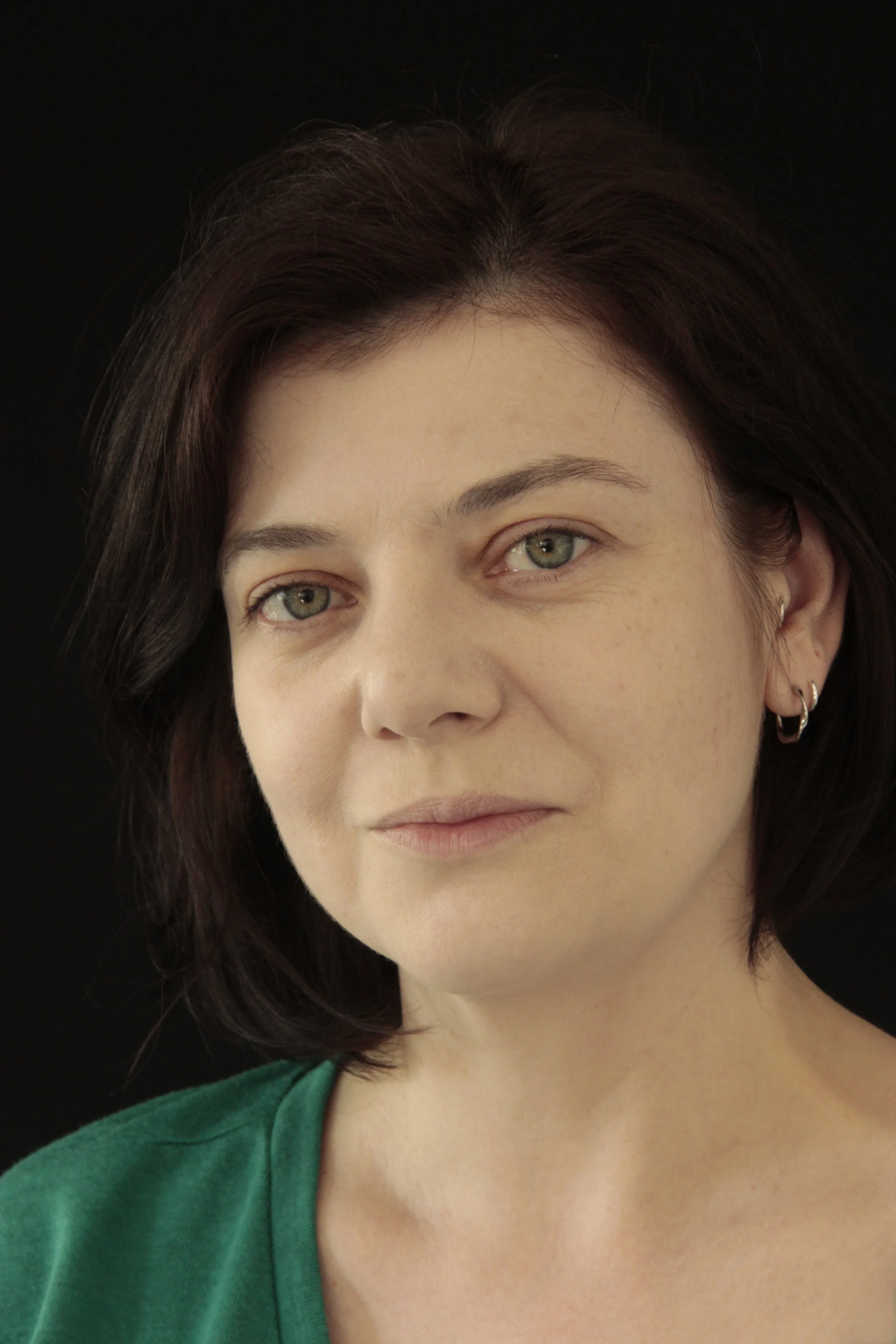
Born in 1984, she lives and works in Lublin, Poland. In 2024, the Academy of Fine Arts in Warsaw awarded her a postdoctoral degree for her habilitation project: “Is an Artist Allowed to Be a Mother?” Through painting, objects, and installations, Małgorzata explores deeply personal narratives surrounding motherhood, childhood memory, intergenerational inheritance, and the emotional architecture that shapes identity. Her work moves between intimacy and collective experience, asking difficult and necessary questions about care, creation, and the lives women inhabit both inside and outside of art. She has participated in more than 120 group exhibitions internationally and organized 13 solo exhibitions across her career.
Is an Artist Allowed to Be a Mother?
“When my children were born, they took over my time and space. Suspended between caregiving and constant service during their early years, and my irresistible need to create, I found in motherhood a profound source of inspiration.
Being a mother evokes in me a full spectrum of emotions: from blissful fulfillment and pure joy, through the fear that comes with responsibility for another human being, to frustration in moments of helplessness. In a world of idealized mothers shaped by social media, I openly admit to failures, mistakes, and imperfect motherhood, without denying my unconditional love for my children.
Although I create based on my own experiences and observations, I address issues that affect every person, not only parents. I returned to my own childhood and examined its long-term impact on my adult life. I challenged the cultural archetype of the “Polish Mother.” I portrayed motherhood as it truly is: with all its background, routine, and exhaustion.
I depicted my daughter and son as individual beings who resist various external influences, particularly in the field of art education. This is important to me not only as a mother, but also as an educator. I often observe with unspoken admiration how my children approach the act of creation, and I see them as potential viewers of art.
I frequently transform old toys into artistic objects, giving them new meaning and allowing myself to speak about the subjects that matter most to me.”
— Małgorzata Gorzelewska-Namiota
━
¿Se le permite a una artista ser madre?
“Cuando nacieron mis hijos, ocuparon mi tiempo y mi espacio. Suspendida entre el cuidado constante durante sus primeros años y mi necesidad irresistible de crear, encontré en la maternidad una profunda fuente de inspiración.
Ser madre despierta en mí un espectro completo de emociones: desde la plenitud y la alegría absoluta, hasta el miedo que acompaña la responsabilidad sobre otro ser humano, así como la frustración en momentos de impotencia. En un mundo de madres idealizadas por las redes sociales, admito abiertamente los errores, las fallas y las imperfecciones de la maternidad, sin negar el amor incondicional que siento por mis hijos.
Aunque creo desde mis propias experiencias y observaciones, abordo temas que afectan a todas las personas, no solo a quienes son padres o madres. Volví a mi propia infancia y examiné su impacto a largo plazo en mi vida adulta. También cuestioné el arquetipo cultural de la “Madre Polaca”, mostrando la maternidad tal como es realmente: con toda su rutina, desgaste y trasfondo invisible.
Representé a mi hija y a mi hijo como seres individuales que resisten distintas influencias externas, particularmente dentro del ámbito de la educación artística. Esto es importante para mí no solo como madre, sino también como educadora. Muchas veces observo con admiración silenciosa la forma en que mis hijos se acercan al acto de crear, y los considero potenciales espectadores del arte.
Con frecuencia transformo juguetes viejos en objetos artísticos, otorgándoles nuevos significados y permitiéndome hablar sobre los temas que más me importan.”
— Małgorzata Gorzelewska-Namiota
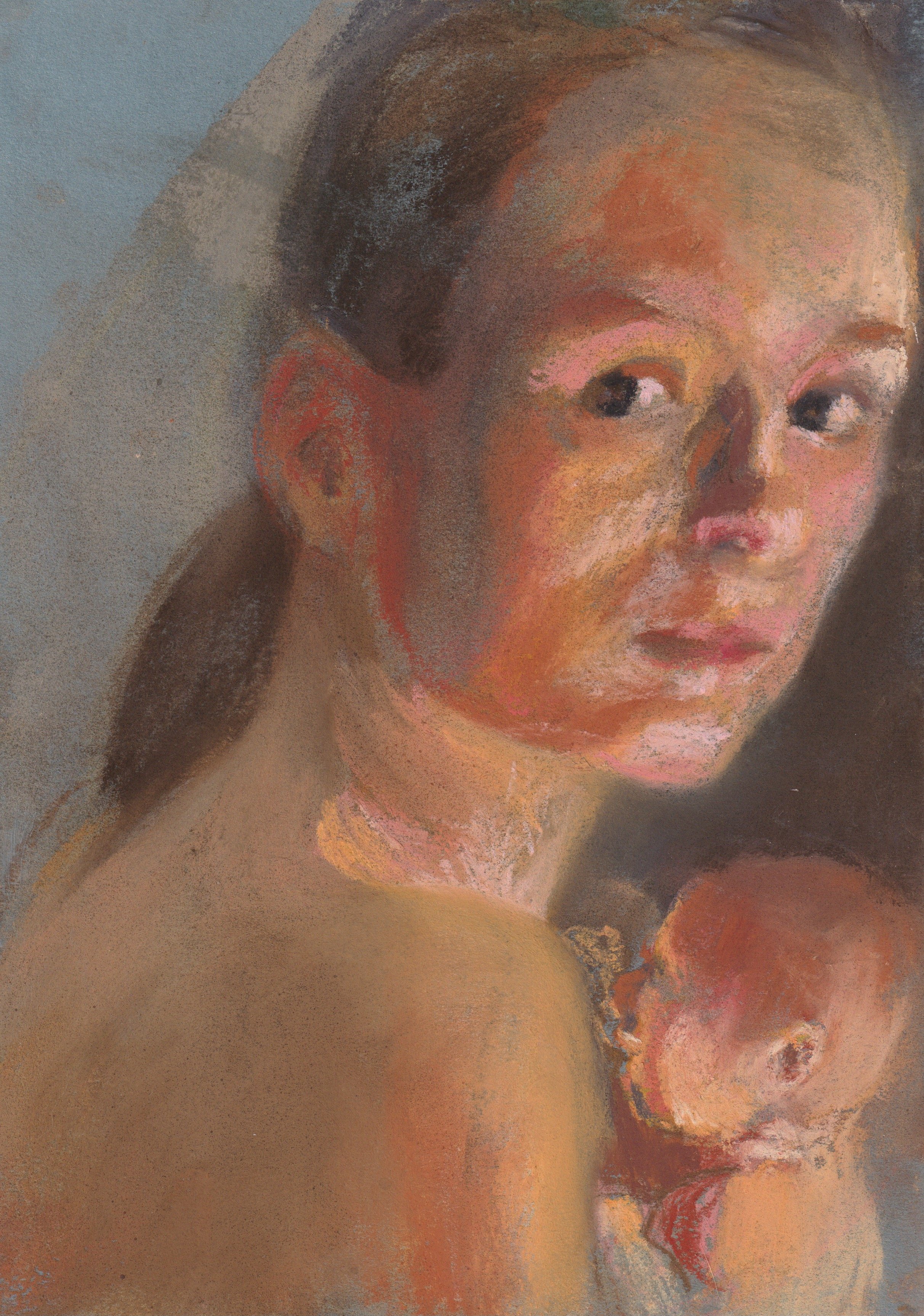
“Duality” Inka Sawicka Pastel on paper. 21 × 29 cm. 2026.
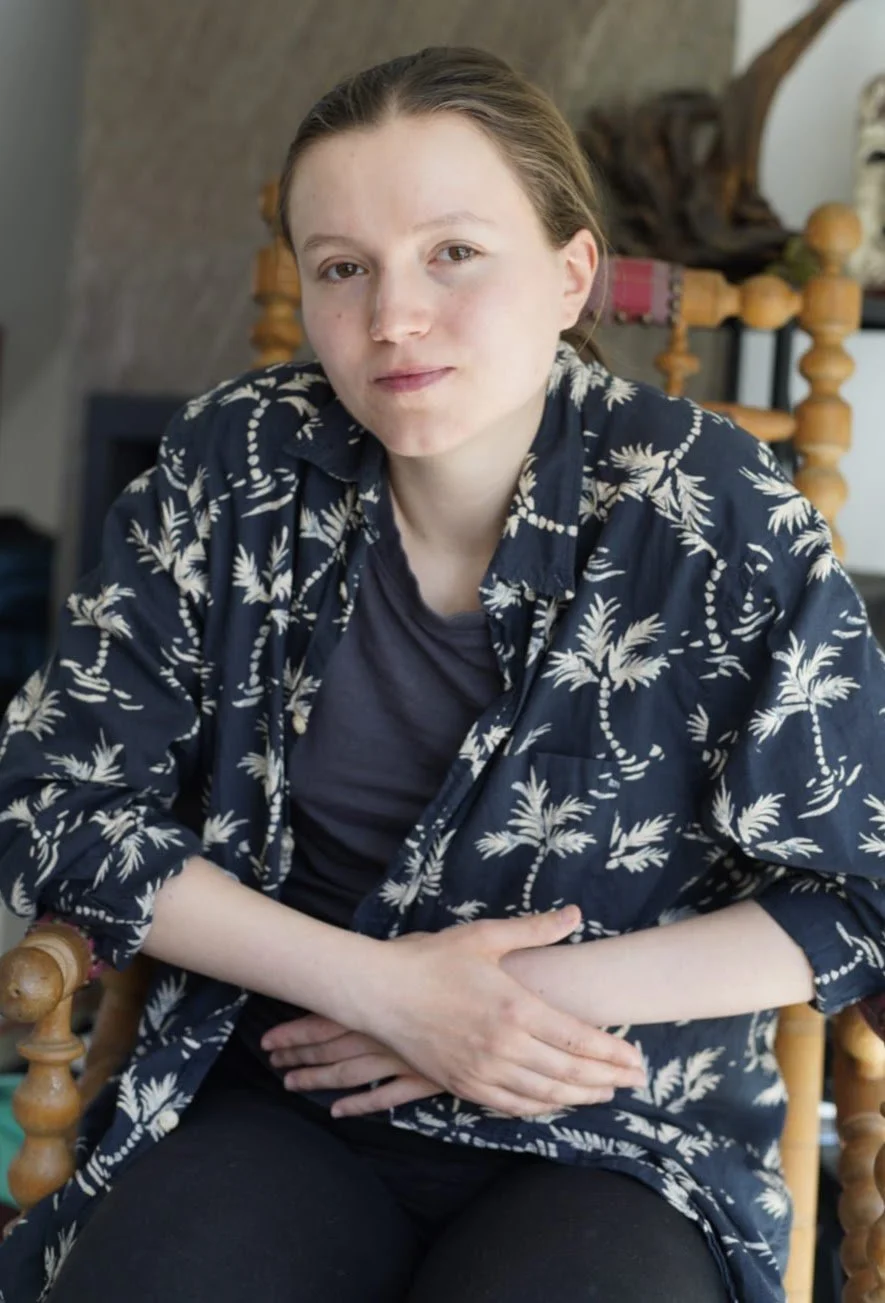
Born and raised in Gdańsk, Poland, Inka studied Painting at the University of the Arts in Poznań, where she explored a wide range of artistic practices including photography, installation, drawing, sculpture, and book-making. Her work is rooted in the observation of fleeting emotions and the quiet poetry of everyday life. Through color, structure, and a deep sensitivity toward nature, Inka creates works that reflect on perception, attention, and the emotional textures hidden beneath contemporary life’s constant noise. Alongside her artistic practice, she has also taught watercolor masterclasses and led painting and drawing workshops for children and adults of all ages.
“My work is primarily focused on capturing fleeting emotions and quiet moments of everyday life. I observe nature with sensitivity and attention, believing that color and structure are essential tools for expressing emotion and beauty.
I am particularly interested in the psychology of perception and in the ways we experience the world around us amid the constant distractions of contemporary reality.”
— Inka Sawicka
━
"Mi trabajo se centra principalmente en capturar emociones fugaces y momentos silenciosos de la vida cotidiana. Observo la naturaleza con sensibilidad y atención, creyendo que el color y la estructura son herramientas esenciales para expresar emoción y belleza.
Me interesa especialmente la psicología de la percepción y las maneras en que experimentamos el mundo que nos rodea en medio de las constantes distracciones de la realidad contemporánea."
— Inka Sawicka
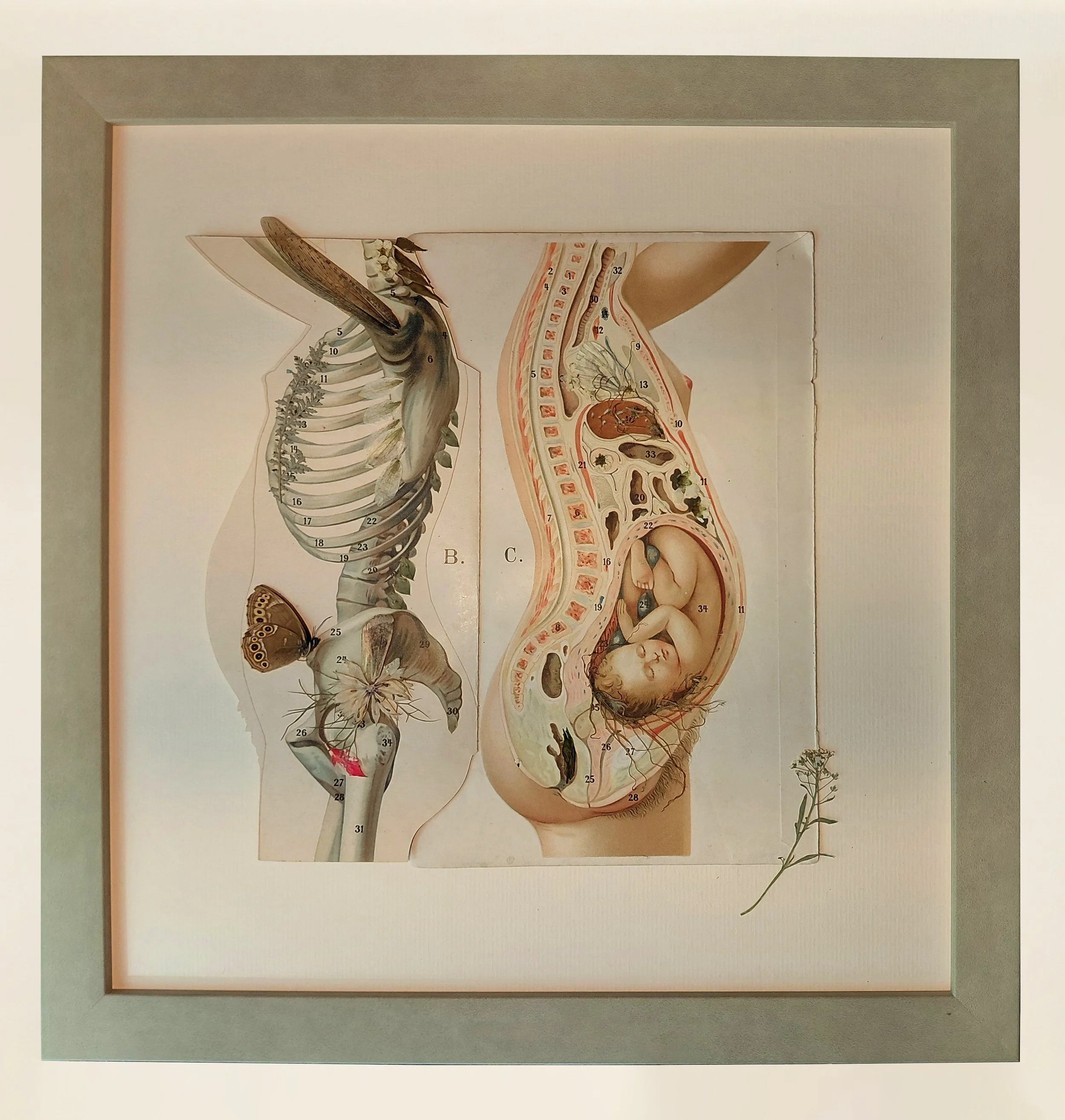
“Madonna Botanical” Daria Rozina (SALT Art Group). Mixed media. Source material: “Anatomically Disassembled Female Body* (Bong & Co., Germany) Natural elements: insects, dried flowers, and leaves 33 × 34 cm. 2026.
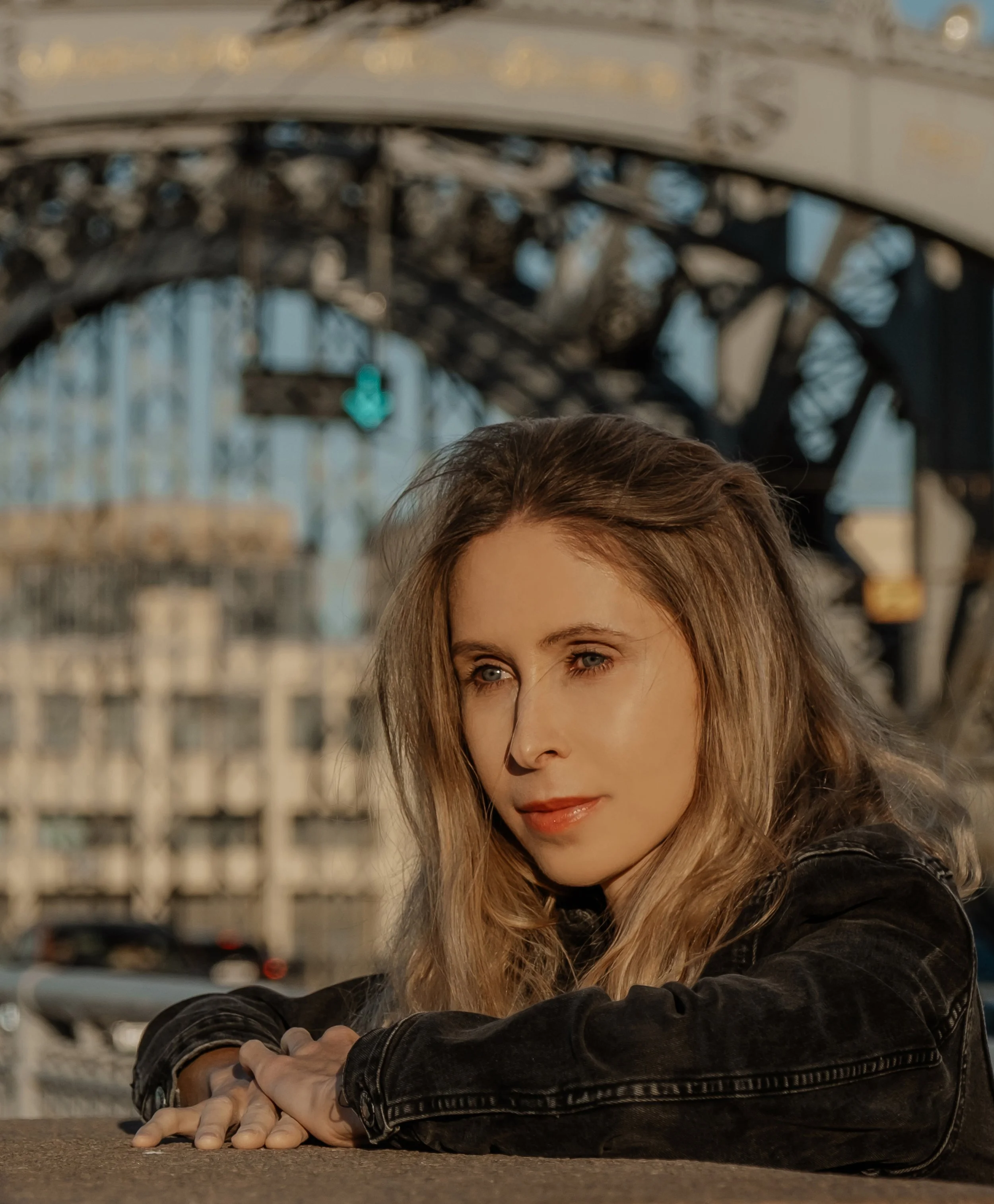
Daria Rozina is an art therapist, music therapist, digital artist, and science communicator whose interdisciplinary practice bridges art, psychology, and neuroscience. A Master of Psychology and member of several international art and neuroscience organizations, Daria’s work explores memory, emotion, identity, and the human body through science-art practices. Her collaborative projects have been presented in museums, scientific institutions, and educational initiatives internationally, weaving together research and artistic experimentation into deeply human experiences. As founder of SALT Art Group and curator of children’s educational programs at the Brain Museum in Saint Petersburg, her practice moves fluidly between care, knowledge, creativity, and emotional exploration.
“Madonna Botanical” is one of the collages from the “Heritage” series, created using illustrations from a 19th-century anatomical atlas. By intertwining anatomical imagery with botanical elements, the work reflects on motherhood, fragility, and the profound connection between the human body and nature.
The butterfly symbolizes the delicate soul of the child, while the roots evoke continuity and invisible bonds between generations. A small red petal appears as a quiet trace of the pain of birth, suggesting both vulnerability and transformation.
━
“Madonna Botanical” es uno de los collages que forman parte de la serie Heritage, creada a partir de ilustraciones de un atlas anatómico del siglo XIX. Al entrelazar imágenes anatómicas con elementos botánicos, la obra reflexiona sobre la maternidad, la fragilidad y la profunda conexión entre el cuerpo humano y la naturaleza.
La mariposa simboliza el alma delicada de un niño, mientras que las raíces evocan la continuidad y los vínculos invisibles entre generaciones. Un pequeño pétalo rojo aparece como una huella silenciosa del dolor del parto, sugiriendo al mismo tiempo vulnerabilidad y transformación.
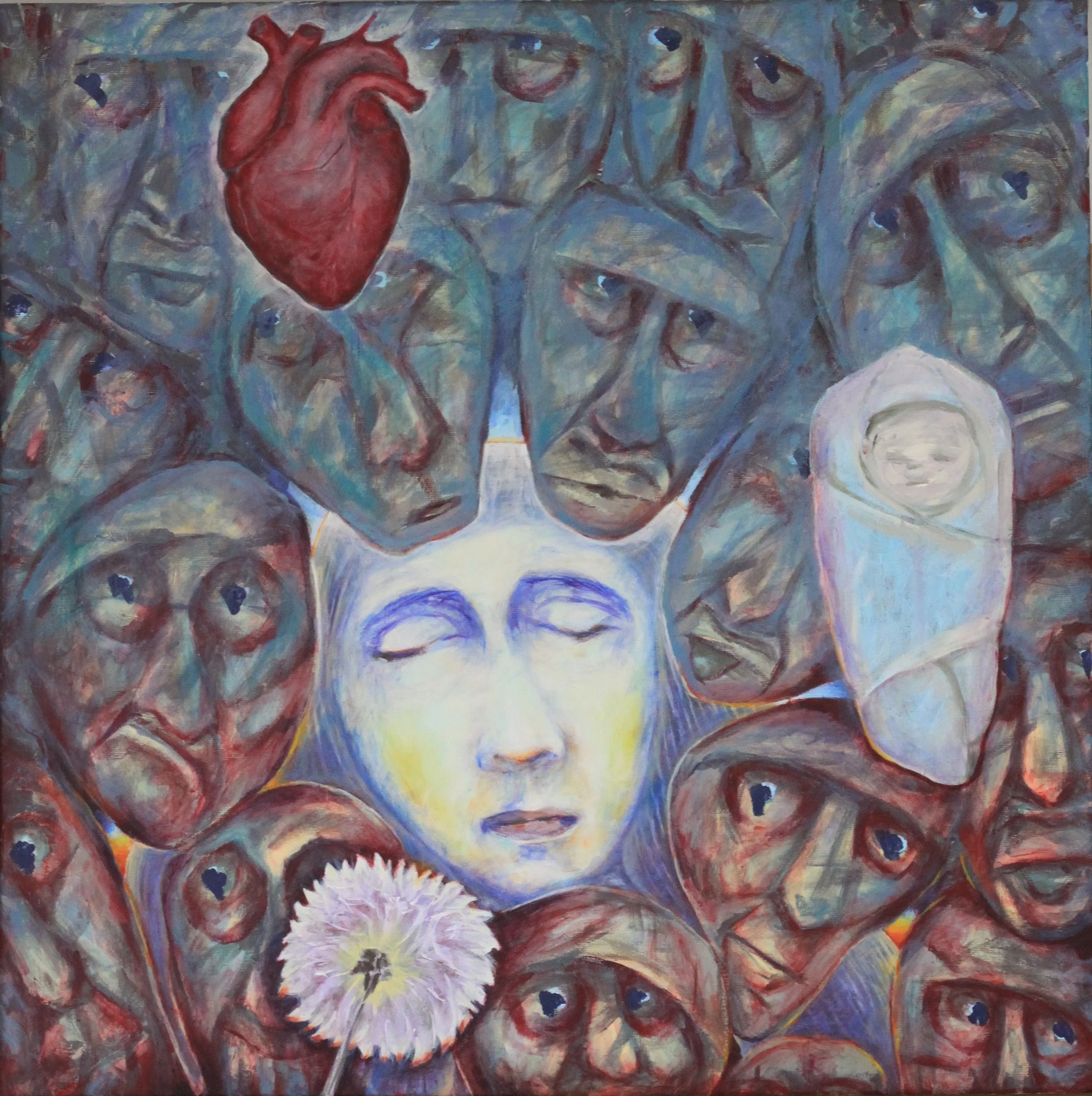
“It’s Just Love” Elżbieta Anna Sadkowski Samek. Acrylic and oil on canvas. 90 × 90 cm. 2019.
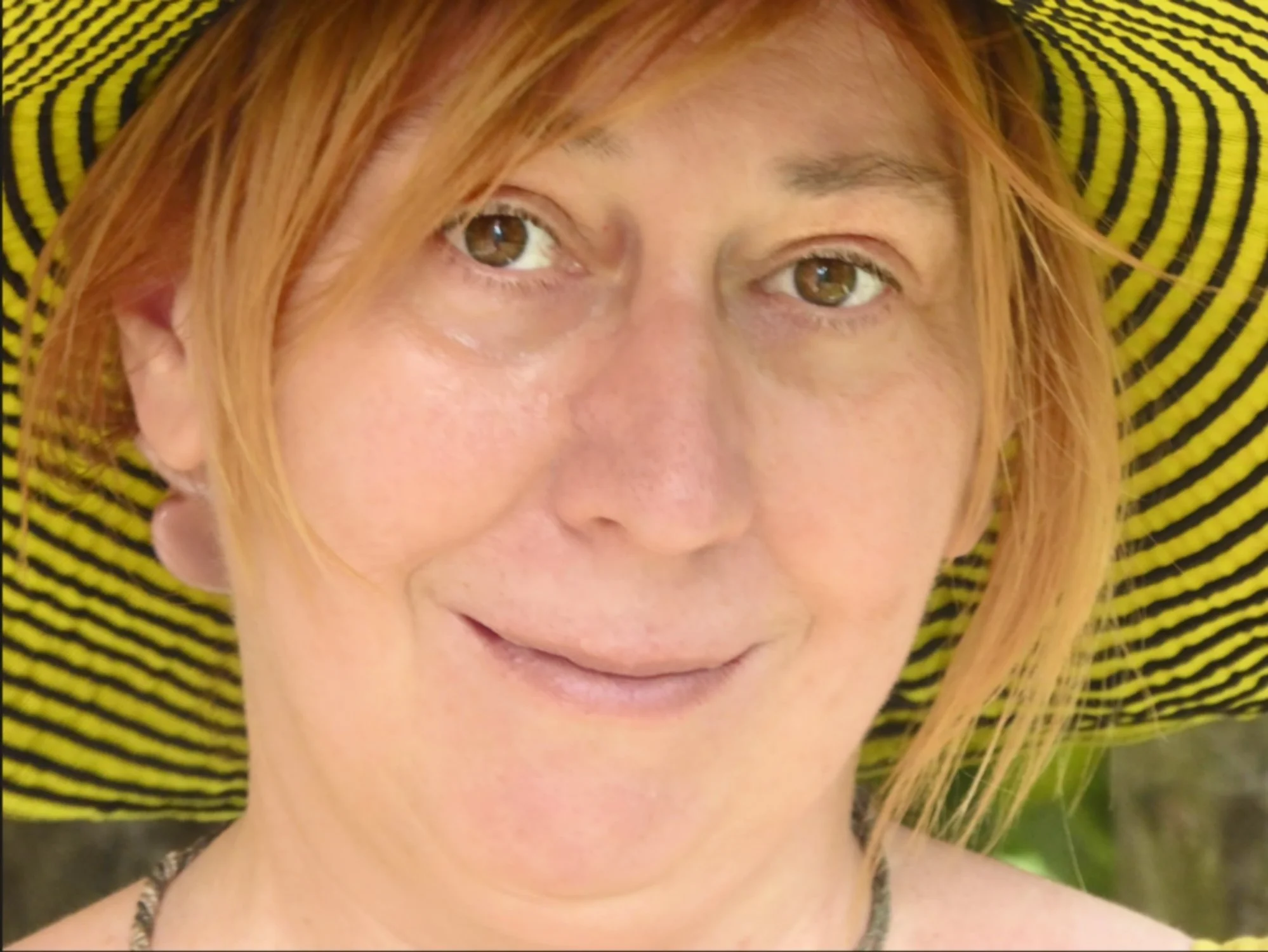
Born in Poland, Elżbieta Anna Sadkowski is a scenographer, sculptor, painter, and architect whose multidisciplinary practice moves fluidly between visual art, theatre, and spatial creation. A graduate of both the Faculty of Architecture at the Cracow University of Technology and the Academy of Fine Arts in Cracow, her work is deeply connected to nature, the passing of time, and humanity’s place within the universe. Through painting, sculpture, drawing, and scenography, she explores the emotional and philosophical condition of human existence in the modern world. Her artistic language seeks to build bridges beyond cultural and linguistic boundaries, proposing art itself as a space for dialogue, memory, and shared experience. Her works have been exhibited internationally and are included in theatre museums and private collections across Switzerland, France, Germany, Italy, Canada, and Brazil.
“This is not an easy painting. It speaks of suffering, rejection, pain, and injustice. It also speaks of immense desire, waiting, and fulfillment. It tells of the power of a mother’s love, a force capable of fighting against the entire world to protect the well-being of her child. This power and this love is motherhood.”
— Elżbieta Anna Sadkowski Samek
Through this deeply moving work, Sadkowski Samek reflects on motherhood not as an idealized image, but as a profound force of resilience, sacrifice, devotion, and unconditional love.
-
"Esta no es una pintura fácil. Habla del sufrimiento, el rechazo, el dolor y la injusticia. También habla de un deseo inmenso, de la espera y de la realización. Habla del poder del amor de una madre, capaz de enfrentarse al mundo entero para proteger el bienestar de su hijo. Ese poder y ese amor son la maternidad."
— Elżbieta Anna Sadkowski Samek
A través de esta obra profundamente conmovedora, Sadkowski Samek reflexiona sobre la maternidad no como una imagen idealizada, sino como una fuerza profunda de resiliencia, sacrificio, entrega y amor incondicional.
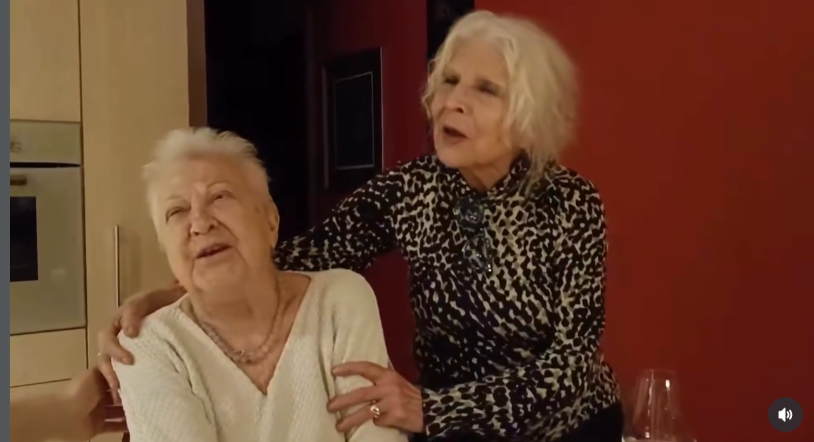
“Oh_Mamy” Barnaba Bonati & Artur Frątczak. Duration: 3 min 46 sec DOP & Editing: Artur Frątczak. Performance: Barnaba Bonati. Concept: Barnaba Bonati & Artur Frątczak.
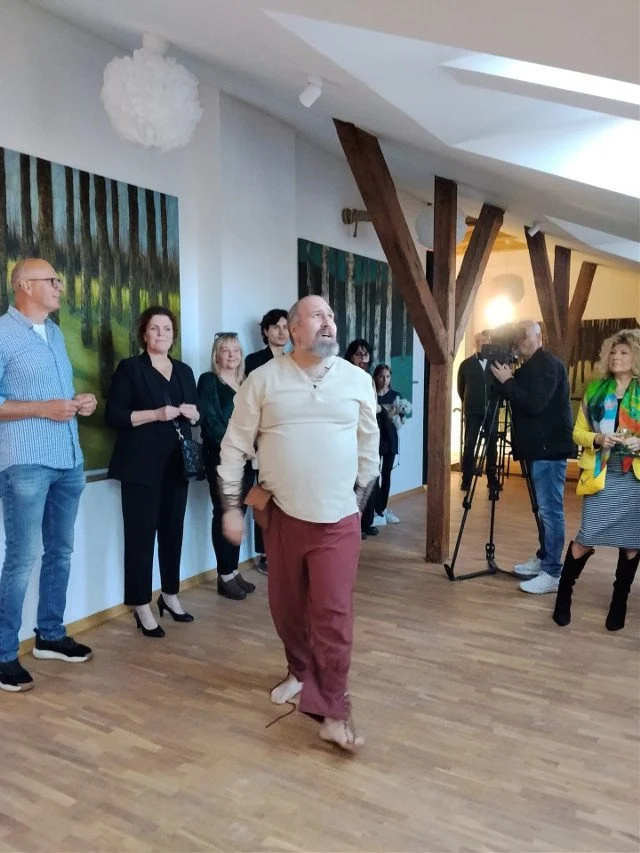
A filmmaker, director, and multidisciplinary artist, Barnaba Bonati holds a PhD in Film Directing from the Leon Schiller National Film School in Łódź, where he specialized in documentary essay and authorial expression. His artistic practice emerges from a unique dialogue between Polish and Italian cultural identities, blending cinematography, performance, sound design, and experimental storytelling into deeply immersive experiences. Working across documentary, video-essay, performative theatre, and mixed media, Barnaba explores the emotional and poetic possibilities that exist between image, memory, sound, and presence. Alongside his artistic work, he teaches sound design and animated documentary at the Academy of Fine Arts in Łódź.
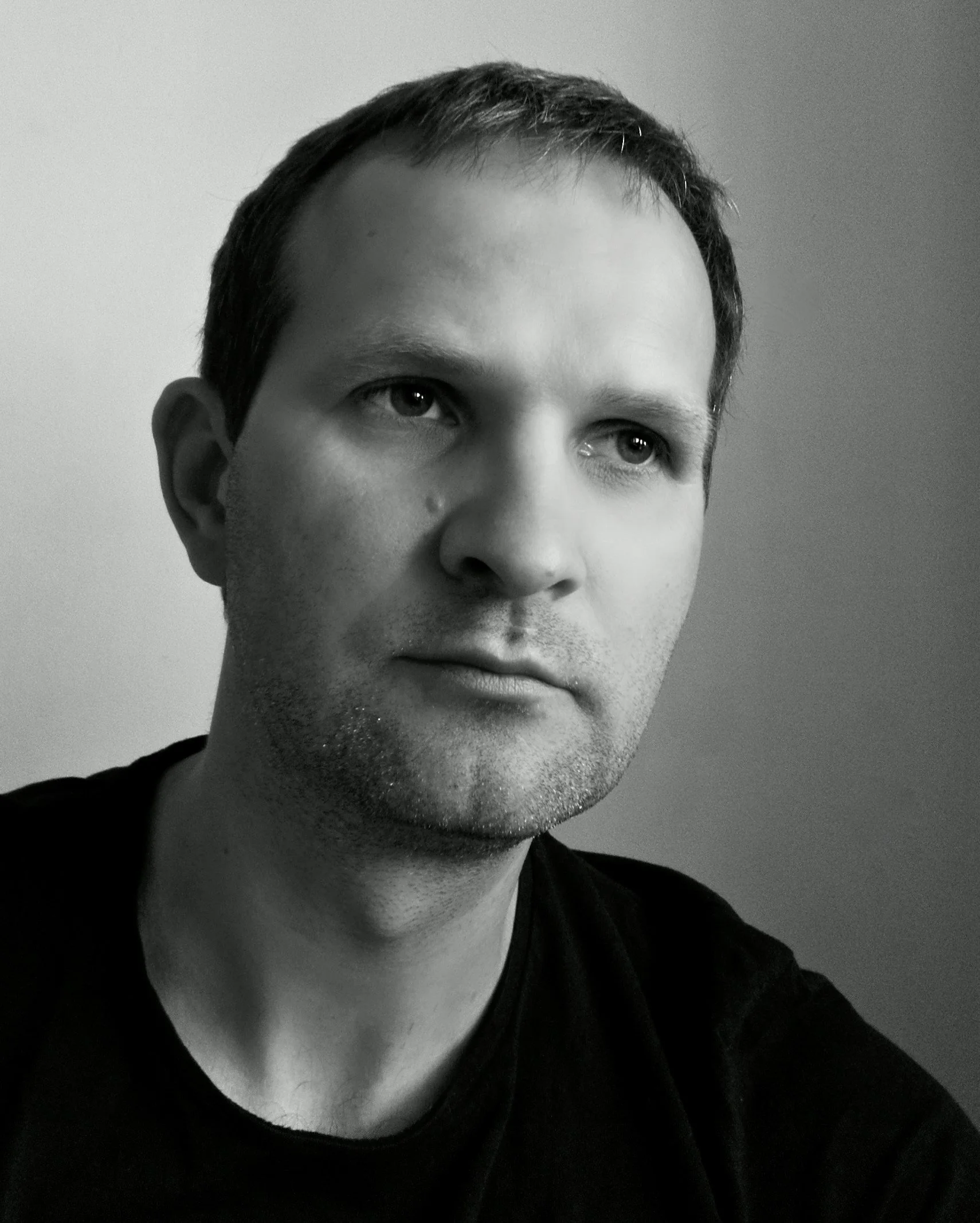
A filmmaker, cinematographer, and director, Artur Frątczak works across documentary cinema, feature film, and emerging technologies including artificial intelligence, augmented reality, and virtual reality. Holding a PhD in film arts, he currently lectures at the Polish National Film, Television and Theatre School in Łódź, where his teaching and research focus on image transformation and the evolving relationship between technology and perception. Through film, photography, video art, and immersive media, Artur explores the fluidity of contemporary reality and the ways technology reshapes human experience, memory, and visual language. Light itself plays a central role within his artistic practice, becoming both material and metaphor. His work also includes lighting design for major international exhibitions and museums, including *Metamorphoses I & II*, dedicated to the work of Magdalena Abakanowicz.
What language does motherhood speak?
Inspired by an encounter between mothers in Poland, Barnaba Bonati and Artur Frątczak observed a remarkable form of communication that transcended words. Through gestures, glances, intuition, and silent understanding, these women exchanged experiences and emotions in a way that felt immediate and universal.
This observation became the foundation for “Oh_Mamy”, a video work that draws a poetic parallel between motherhood and Morse code. Just as dots and dashes carry messages across distance, the subtle gestures of mothers become a symbolic language capable of expressing what words often cannot.
A meditation on care, intuition, connection, and the invisible transmissions that pass between generations.
━
¿Qué idioma habla la maternidad?
Inspirados por un encuentro entre madres en Polonia, Barnaba Bonati y Artur Frątczak observaron una forma de comunicación extraordinaria que trascendía las palabras. A través de gestos, miradas, intuición y una comprensión silenciosa, estas mujeres intercambiaban experiencias y emociones de una manera que se sentía inmediata y universal.
Esta observación se convirtió en la base de “Oh_Mamy”, una videoinstalación que establece un paralelo poético entre la maternidad y el código Morse. Así como los puntos y las rayas transmiten mensajes a través de la distancia, los sutiles gestos de las madres se transforman en un lenguaje simbólico capaz de expresar aquello que las palabras a menudo no pueden.
Una reflexión sobre el cuidado, la intuición, la conexión y las transmisiones invisibles que viajan de una generación a otra.
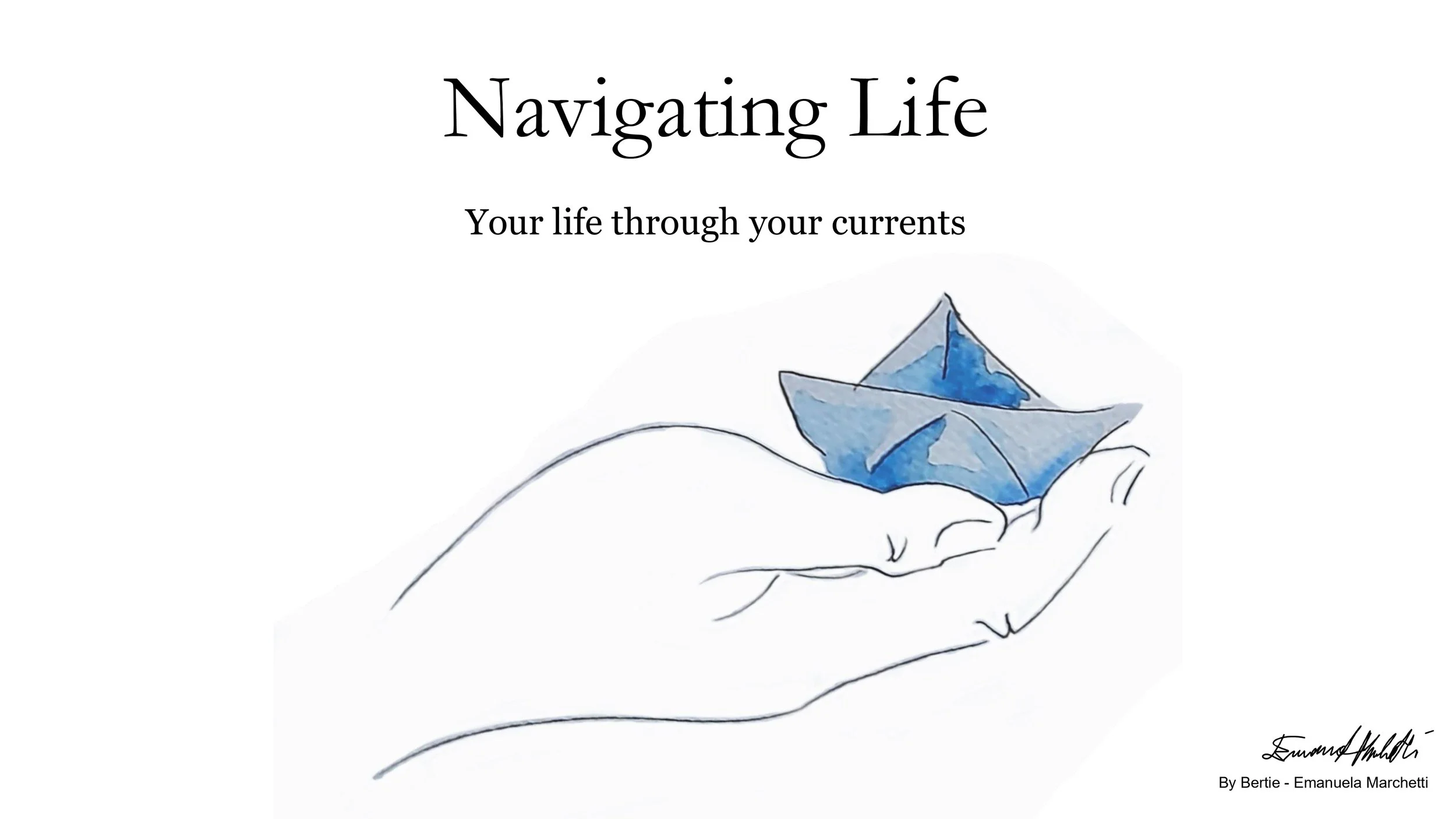
“Navigating Life” Illustrated artist booklet. Bertie.
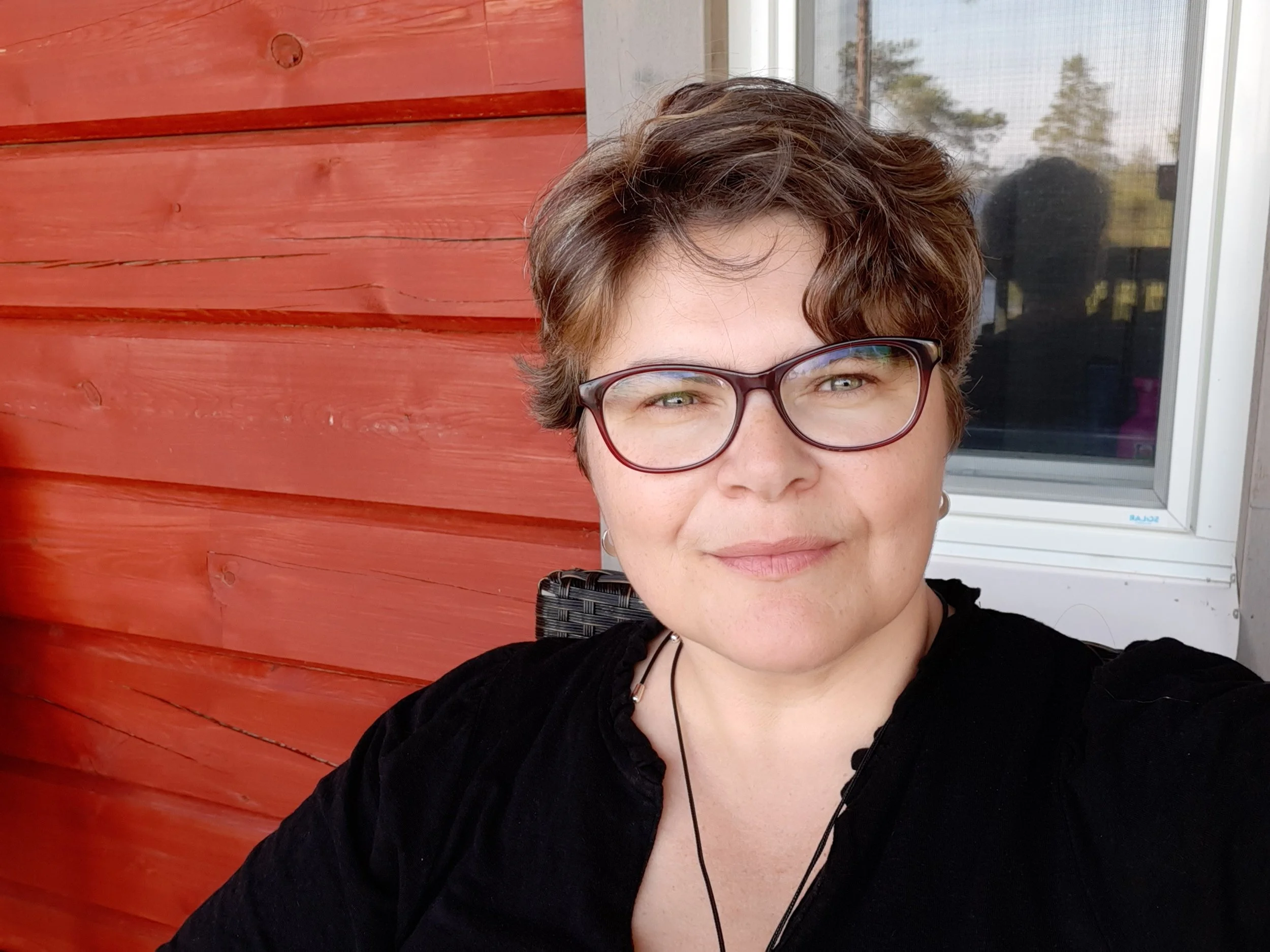
Born in Northwestern Italy and currently based in Denmark, Emanuela Marchetti is a painter and illustrator whose multidisciplinary background bridges archaeology, design, animation, and visual storytelling. Throughout her studies and artistic journey, she has explored painting, drawing, clay sculpture, photography, animation, watercolor, acrylics, and digital painting, developing a sensitive visual language deeply rooted in observation, texture, and imagination. Her work moves fluidly between scientific illustration and poetic image-making, combining precision with emotional atmosphere. Recently, she has revisited acrylic painting through large-scale commissioned work, continuing to expand her artistic practice across different materials and forms.
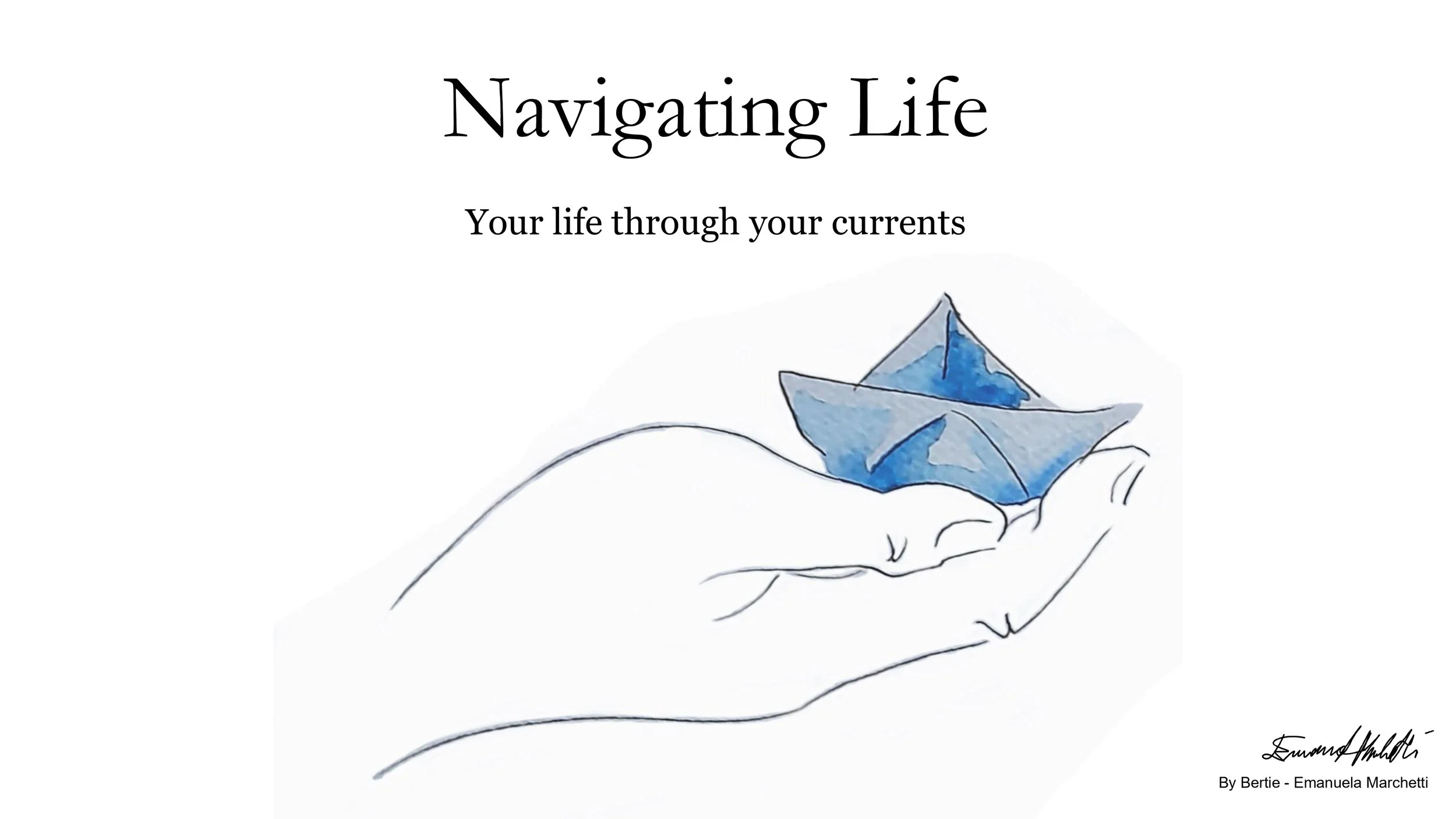
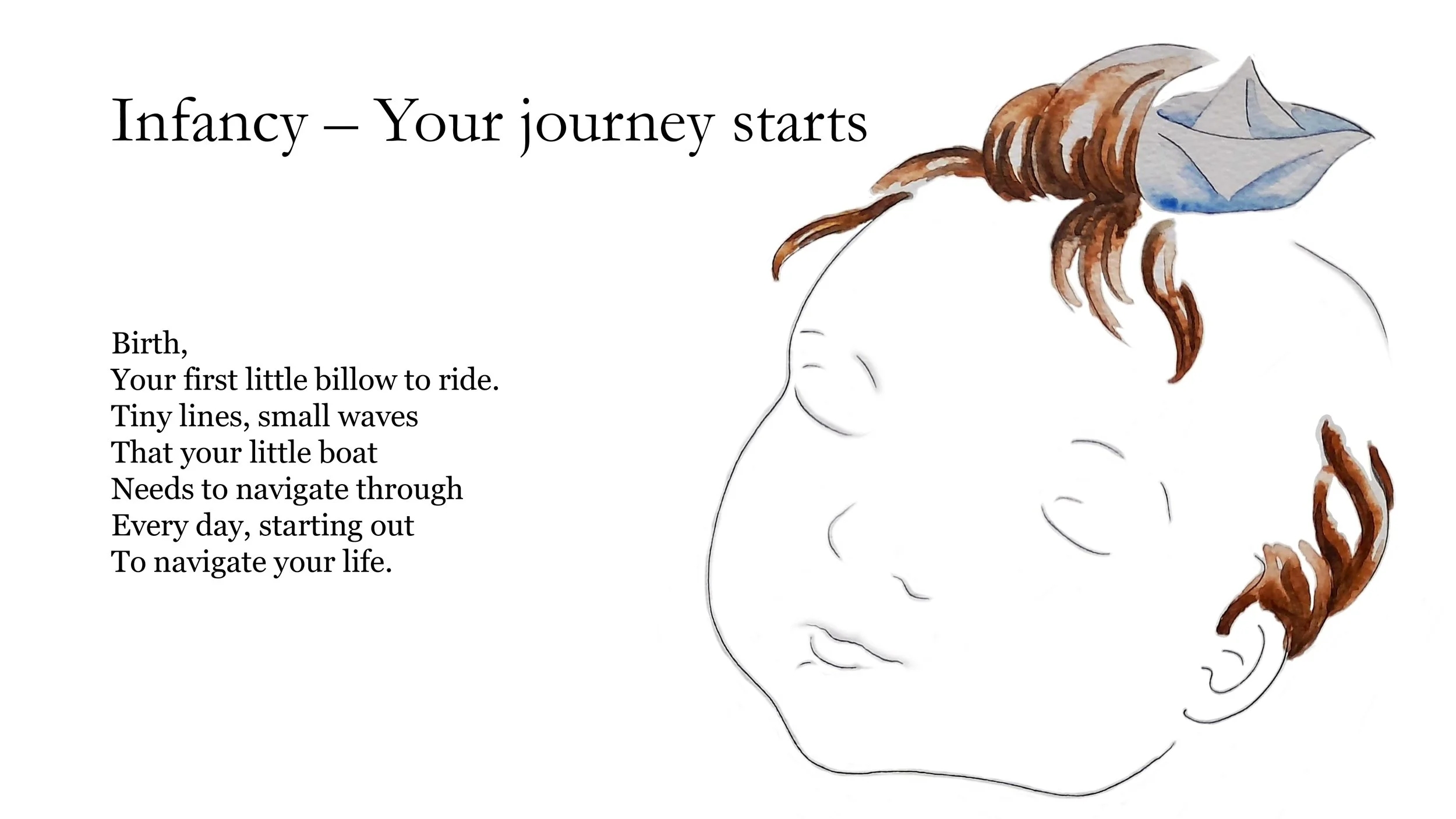
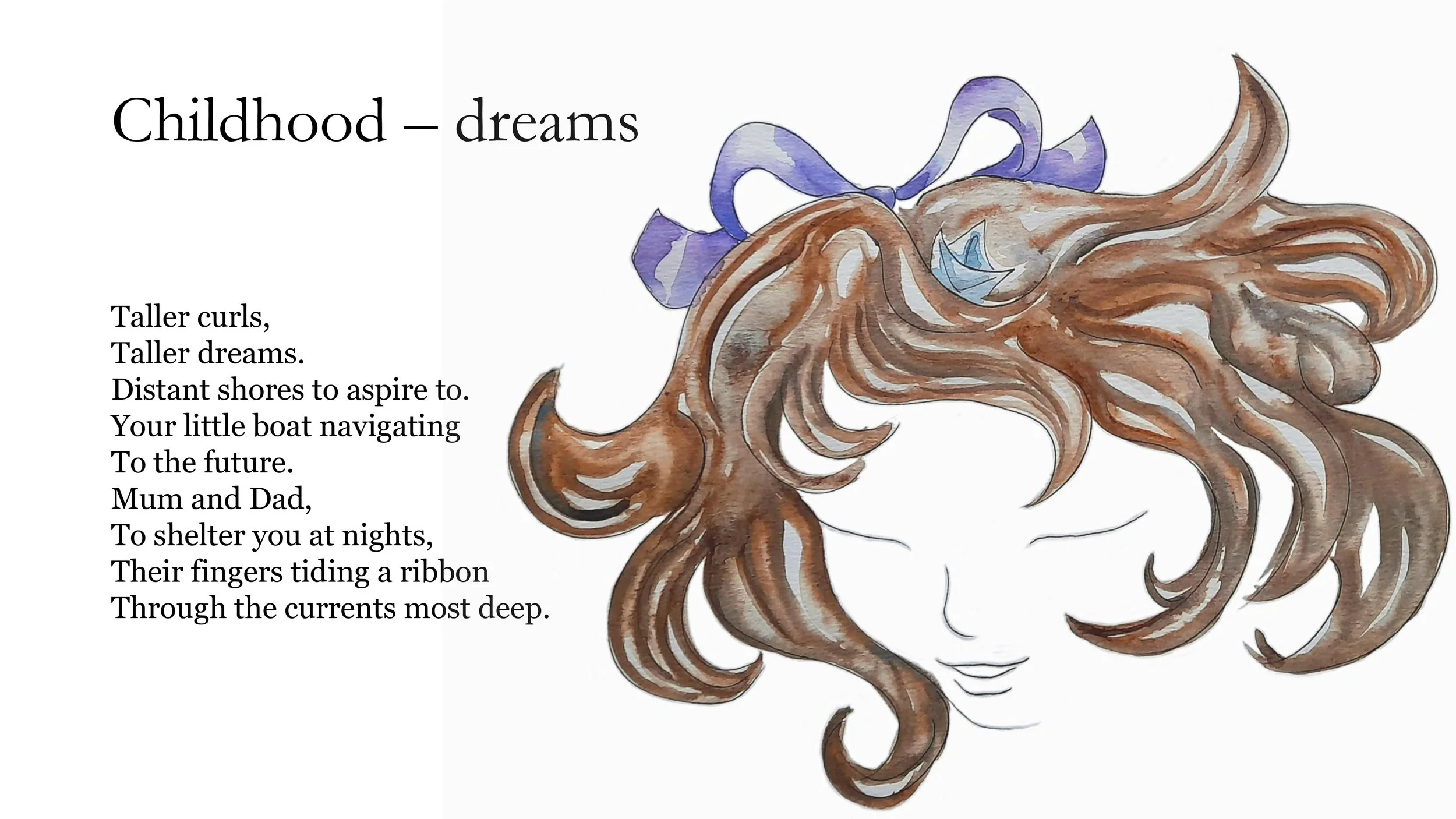
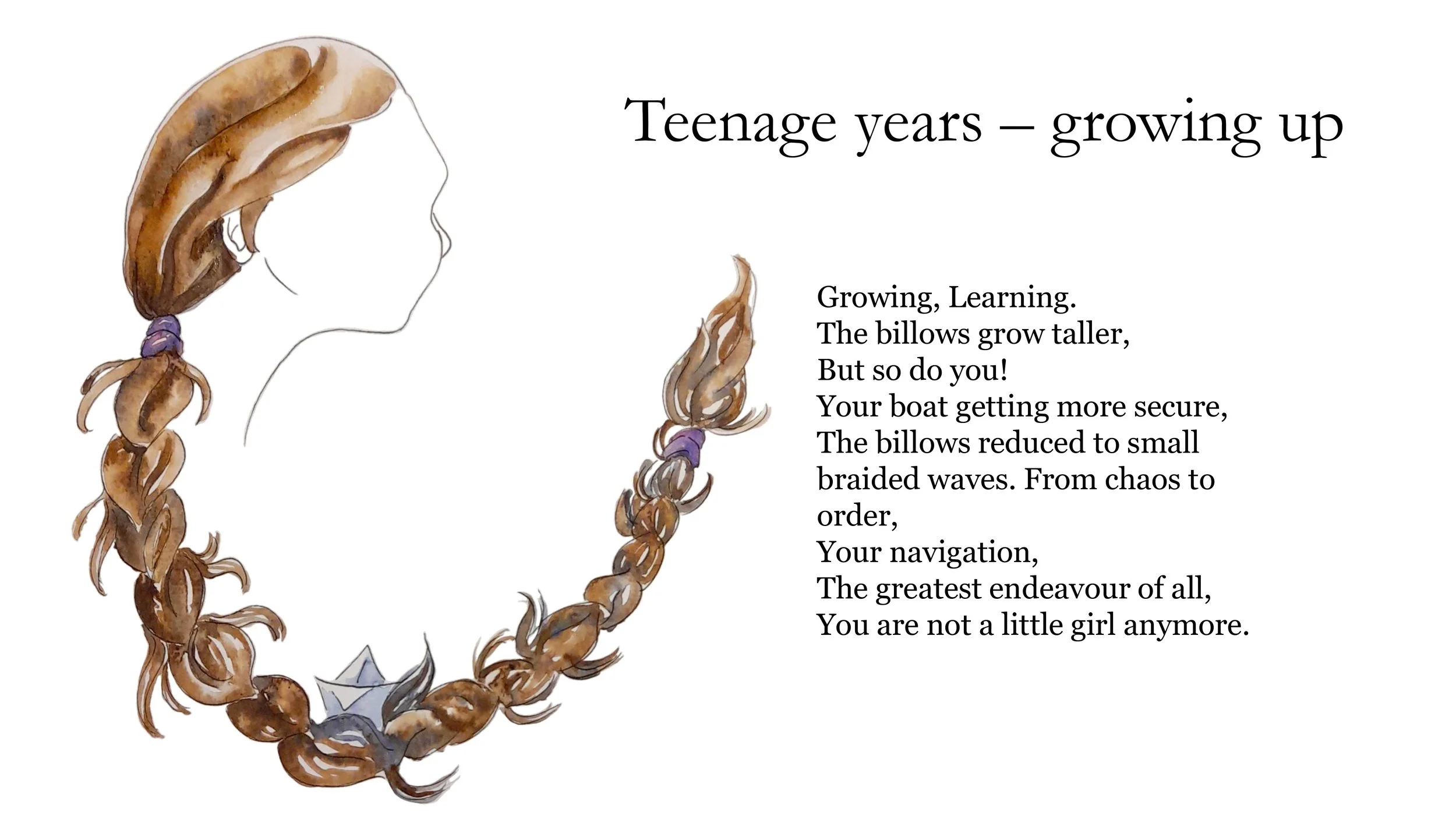
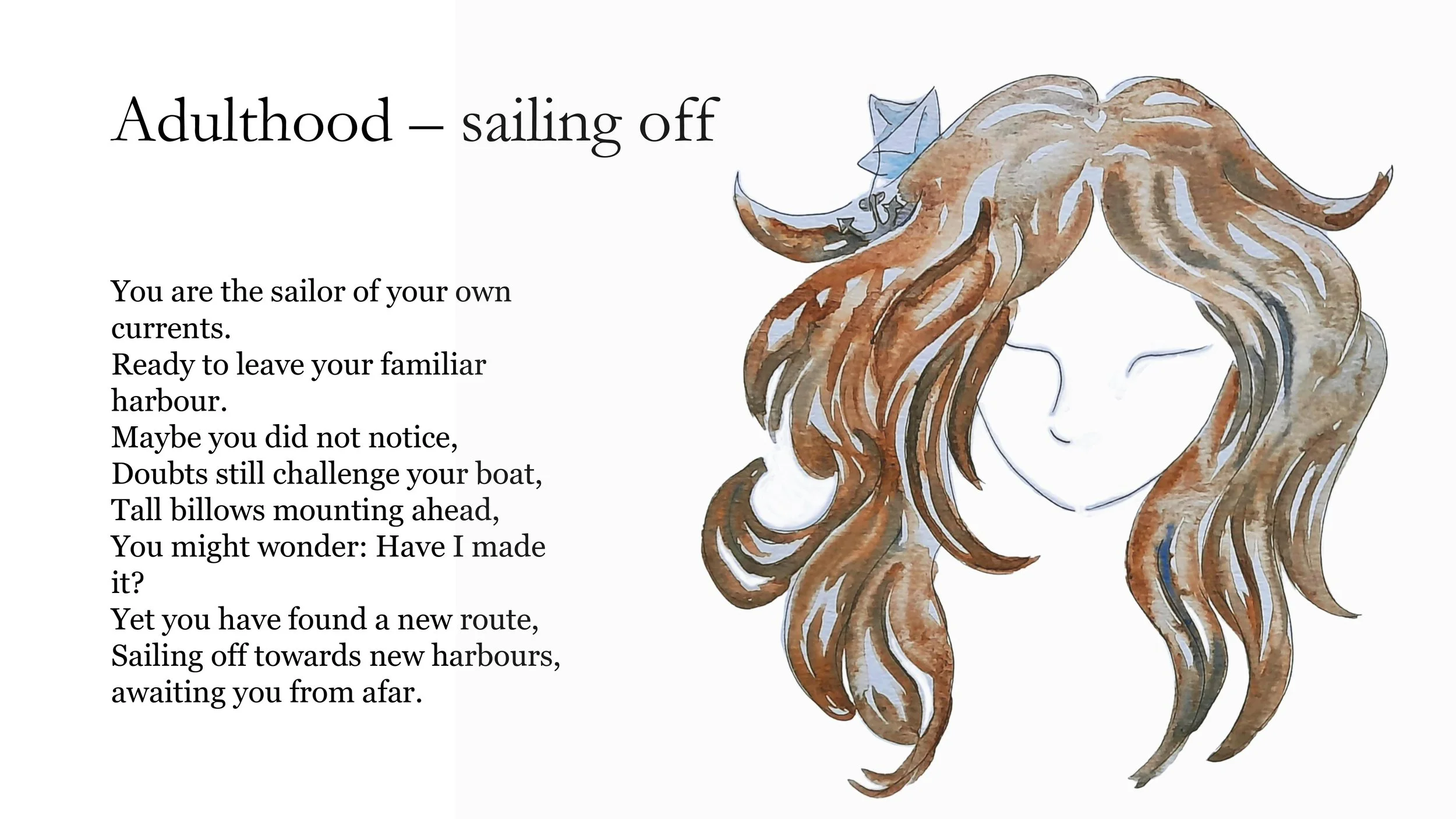
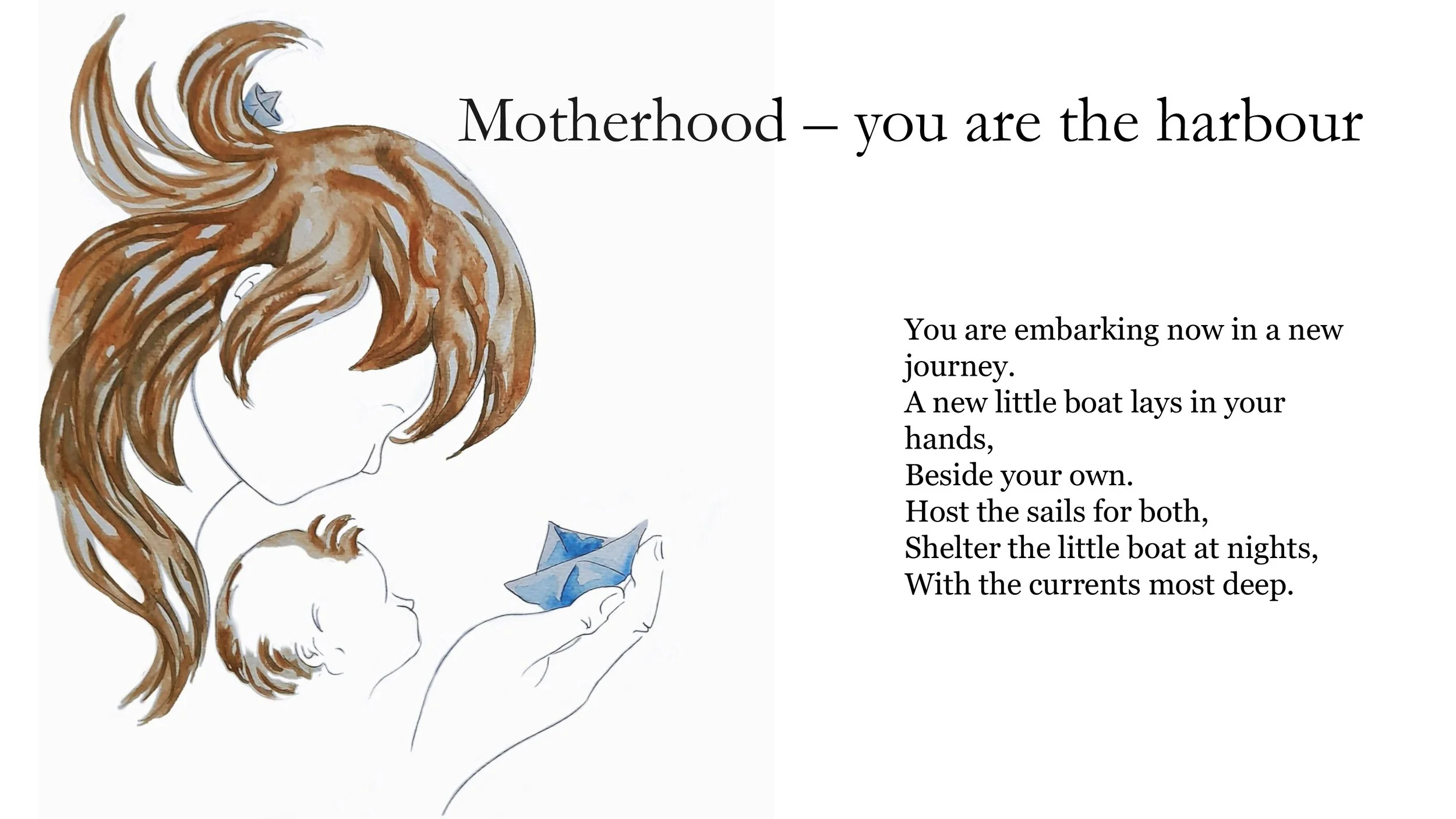
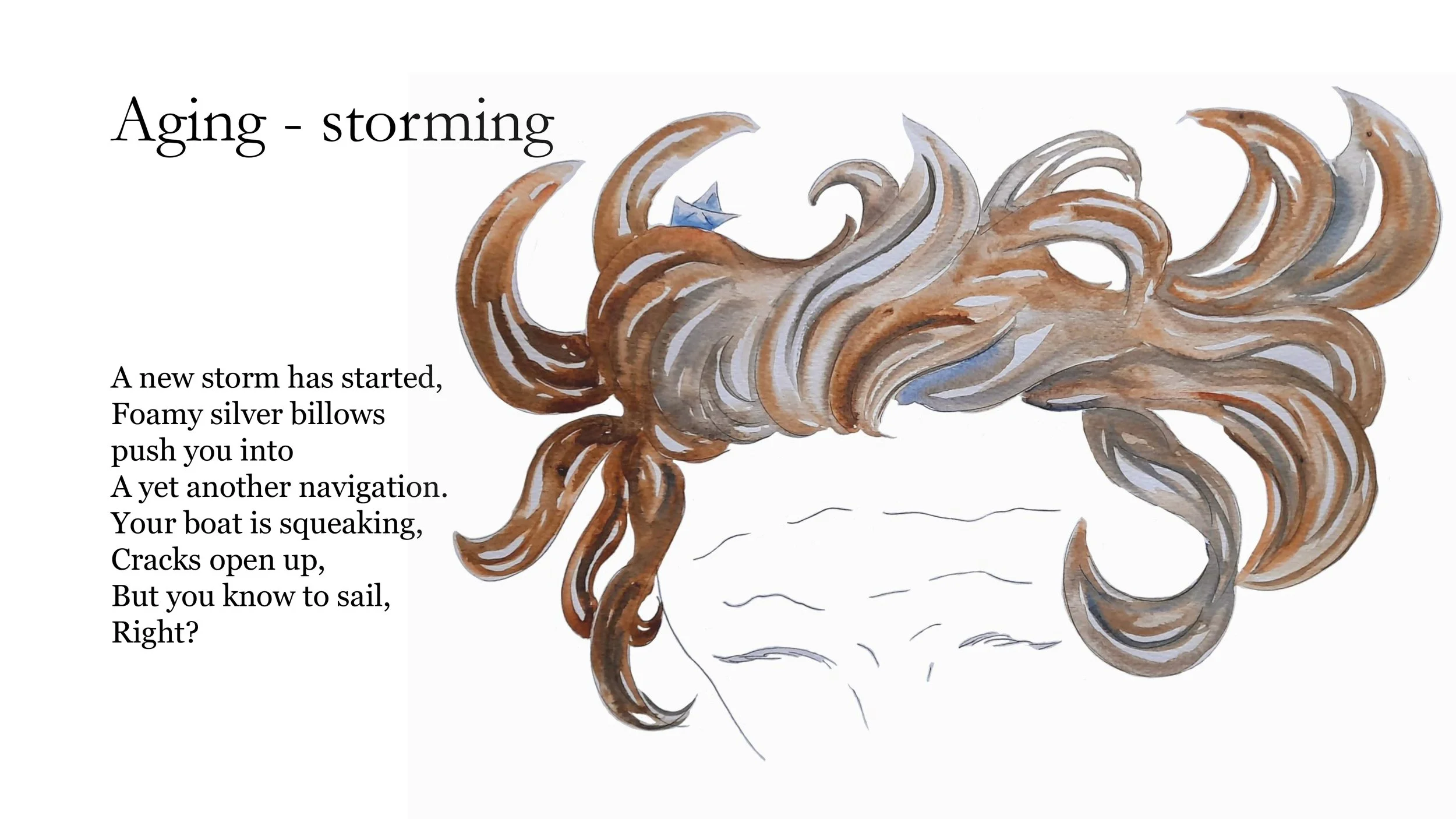
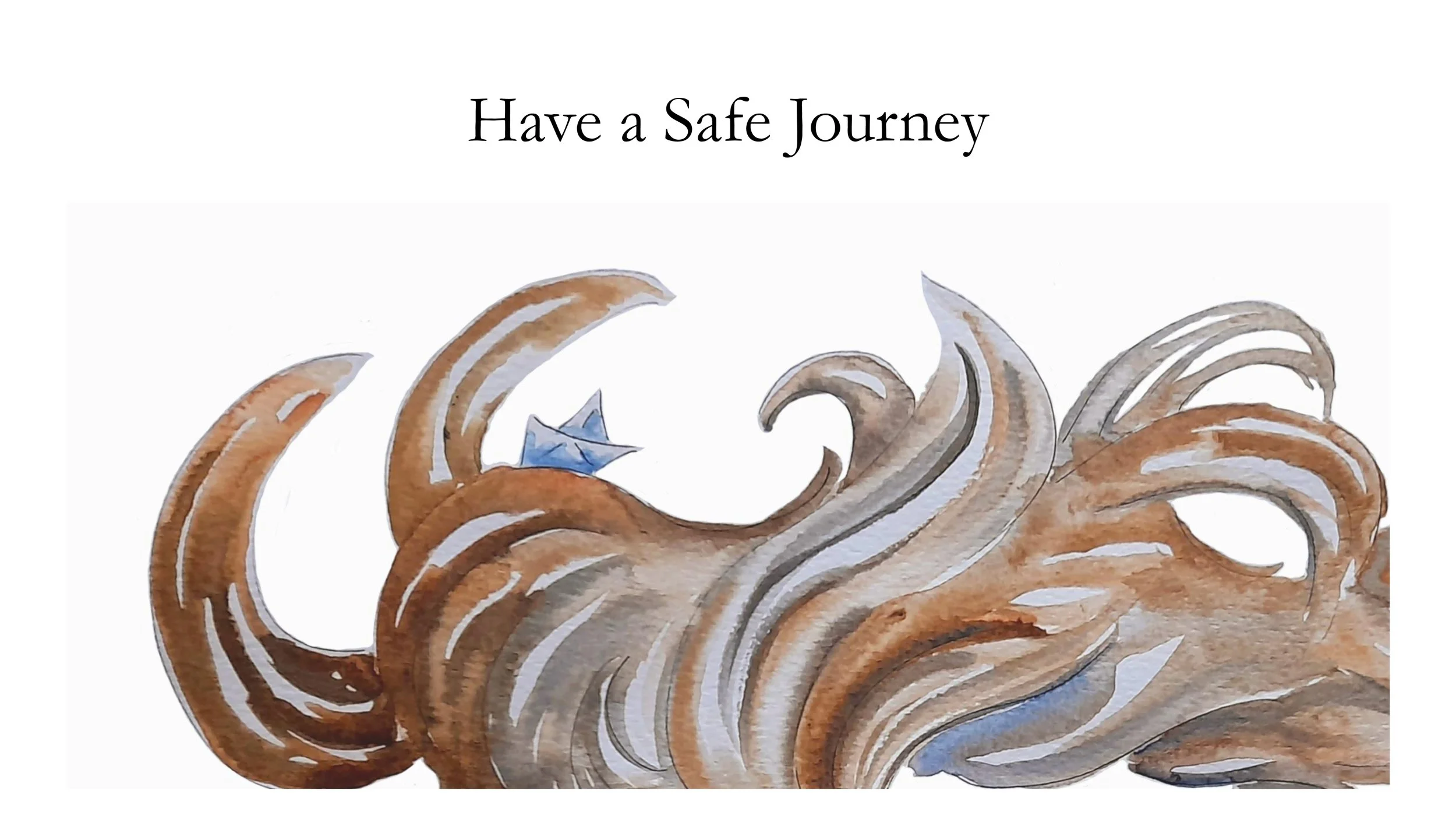
“Navigating Life” is a poetic reflection on motherhood, aging, and the journey of becoming. Using the ocean as a metaphor for life itself, Emanuela Marchetti explores the passage from childhood to adulthood, and ultimately to motherhood.
Throughout the work, braids, waves, and paper boats become symbols of growth, vulnerability, and transformation. The fragile paper boat mirrors the human experience: navigating uncertainty, weathering time, and learning to care for others while continuing to discover oneself.
Inspired by natural forms, botanical illustration, and surrealist imagery, Marchetti’s work reflects on the cycles of life and the quiet beauty hidden within everyday experiences.
Artist Statement:
“I am inspired by natural forms, often interpreted through a surrealist lens, as if crystallized within a slow, contorted dance through life. I am also influenced by archival aesthetics and the tradition of naturalistic and botanical illustration, reimagining these visual languages within a contemporary fine art context.
Recently, I have been exploring themes related to the cyclical nature of life from both biological and emotional perspectives, including aging and motherhood. My work reflects on the transformations of the body and the shifting perception of self that accompany our journey from youth to maturity and old age, as we navigate the vast ocean of life.
More recently, I have begun developing poetic illustrated booklets for audiences of all ages, reflecting on existence and the quiet poetry hidden within everyday life.”
-Emanuela Marchetti (Bertie)
━
"Navigating Life"
"Navigating Life" es un cuadernillo poético sobre la experiencia de convertirse en madre mientras una mujer aprende a dar sentido a su propia vida. La navegación a través del océano funciona como una metáfora del proceso de maduración, reflejando las experiencias femeninas desde la infancia hasta la adultez y, eventualmente, la maternidad.
El cabello, las olas y las trenzas representan distintas etapas de la vida. La trenza simboliza la infancia y la adolescencia, evocando el descubrimiento de la belleza, la identidad y el deseo de explorar diferentes versiones de una misma. Esta travesía por la vida puede resultar intimidante e incierta. La fragilidad humana se representa mediante un barco de papel: un objeto sencillo hecho a mano, destinado a navegar sobre el agua, pero también a desgastarse durante el viaje. En este sentido, el barco de papel se convierte en una metáfora tanto de la maternidad como de la condición humana.
A medida que envejecemos, aprendemos a navegar con mayor confianza, hasta llegar al momento en que sentimos que podemos cuidar de otra vida. El miedo sigue presente, pero un día nos encontramos sosteniendo a nuestros hijos en brazos, hasta que sus propios barcos de papel están listos para navegar mar abierto más allá de nuestro alcance.
En el camino encontramos desafíos e incertidumbres. Aunque el miedo nunca desaparece por completo, aprendemos a convivir con él. Incluso cuando nuestro cuerpo envejece, nuestro cabello se vuelve gris y aparecen las arrugas, adquirimos sabiduría y resiliencia. Nos convertimos en mejores navegantes del océano de la vida.