“Bajo el Mismo Cielo”
Under The Same Sky
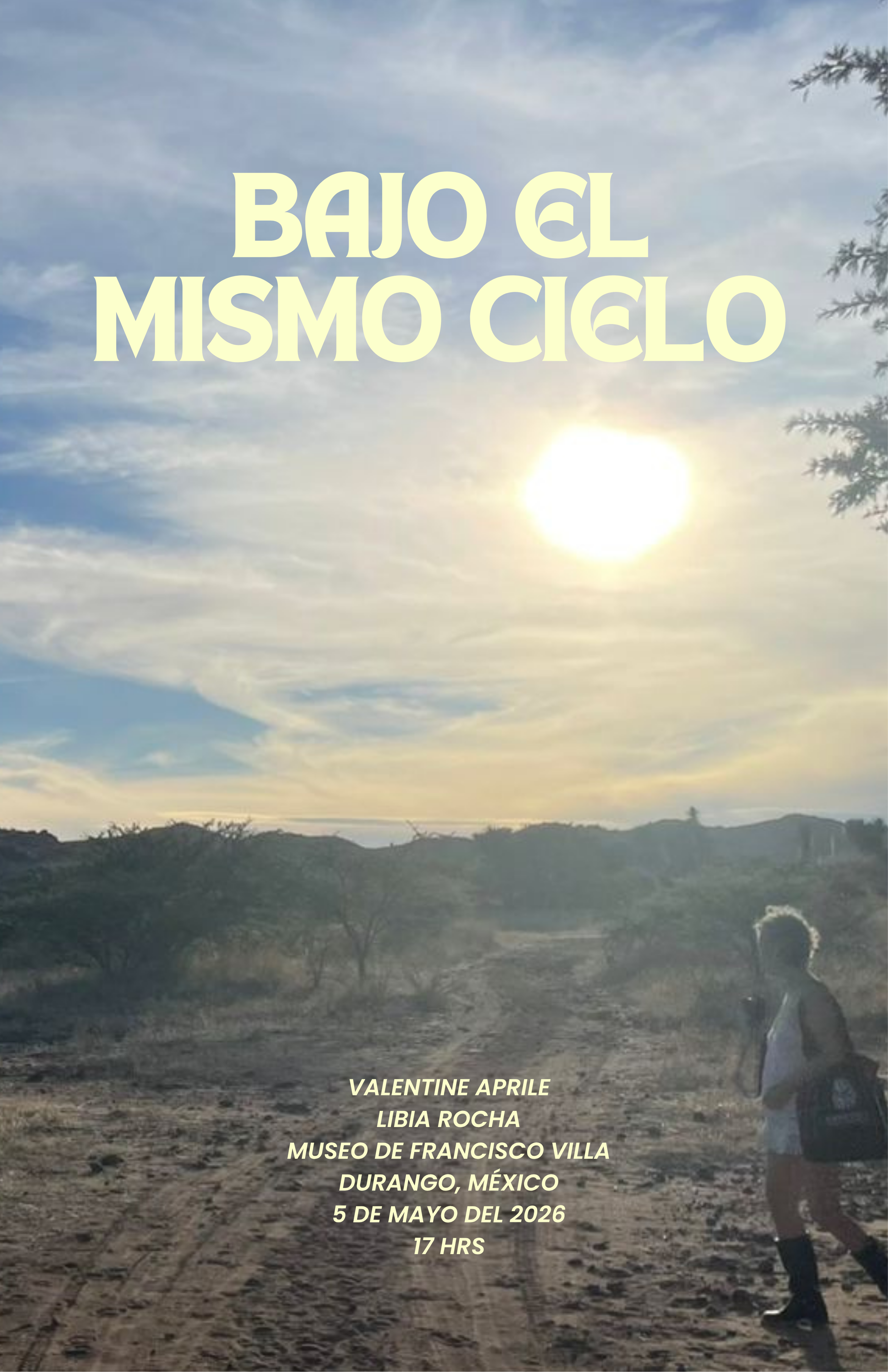
There is a particular way the sky unfolds in Durango. Vast yet intimate, cinematic yet deeply personal, it stretches across desert roads, mountains, memory, migration, and return. Under the Same Sky emerged from that atmosphere: a final exhibition bringing together artists Valentine Aprile and Libia Rocha at the close of the latest cycle of the Sierra Madre International Artist Residency, held from April 24 to May 8, 2026.
Through six paintings and a series of video works, both artists explored the emotional and symbolic landscape of Durango, allowing the territory itself to become collaborator, witness, and archive. Though distinct in approach, their works converged in an investigation of belonging, ancestry, perception, and the ways landscape shapes inner life.
For Valentine Aprile, whose family migrated from Durango to the United States generations ago, the residency became both artistic process and ancestral return. Upon arriving, she immediately began documenting the environment through photography and video, gathering fragments of movement, sound, atmosphere, and memory. The resulting video pieces function as meditations on place and generational memory, tactile studies of gesture, repetition, and time.
“I already felt connected to this place through my family history,” she reflected, “but I wanted to deepen that feeling and be able to express it.”
This emotional connection also permeated her paintings, particularly the large blue canvas A Meditation on Place, where abstraction becomes a contemplative language for memory and intuition. Another work, Mission Santa Lucía Street, inspired by one of her videos, centers on resilience, migration, and inherited strength. The piece references her great-grandmother, Antonia Aguirre Chávez, who walked from Durango to Texas with two children during the social turbulence of early twentieth-century Mexico.
“There is beauty in that kind of endurance and resilience that carries from generation to generation,” Aprile shared.
Exhibiting in Durango carried profound emotional significance for the artist, who described the experience as spiritual: a return not only to geography, but to a deeper sense of continuity between past and present, family and landscape, body and memory.
Libia Rocha’s series Raíces similarly approached landscape as a site of emotional and symbolic reconstruction. Through compositions oscillating between abstraction and impressionism, Rocha revisited the vegetation, heat, atmosphere, and organic forms of Durango as sensory memories transformed into painterly language.
The series reflects on reconnection with origins once rejected, examining how the climate and geography of Durango shaped both her personal identity and artistic development. Neon pink sunsets, dissolving structures, and fluid natural forms appear throughout the works like memories in flux, resisting fixed definitions of identity or belonging.
Rocha thinks of roots as living systems: shifting, permeable, and continuously negotiating with the present.
Together, the works in Under the Same Sky suggest that landscape is inheritance, body, emotion, political history, and psychic terrain. The exhibition becomes a conversation between two artists navigating memory through image, gesture, and atmosphere beneath the same Durango sky.
Hay una forma particular en la que el cielo se despliega en Durango. Vastísimo y a la vez íntimo, cinematográfico pero profundamente personal, se extiende sobre caminos desérticos, montañas, memoria, migración y retorno. Bajo el mismo cielo surgió desde esa atmósfera: una muestra final que reunió a las artistas Valentine Aprile y Libia Rocha al cierre del más reciente ciclo de la Residencia Artística Internacional Sierra Madre, realizado del 24 de abril al 8 de mayo de 2026.
A través de seis pinturas y una serie de piezas en video, ambas artistas exploraron el paisaje emocional y simbólico de Durango, permitiendo que el territorio mismo se convirtiera en colaborador, testigo y archivo. Aunque distintas en enfoque, sus obras convergen en una investigación sobre pertenencia, ancestralidad, percepción y las formas en que el paisaje moldea la vida interior.
Para Valentine Aprile, cuya familia migró de Durango hacia Estados Unidos hace generaciones, la residencia se convirtió tanto en un proceso artístico como en un retorno ancestral. Al llegar, comenzó inmediatamente a documentar el entorno mediante fotografía y video, recolectando fragmentos de movimiento, sonido, atmósfera y memoria. Las piezas resultantes funcionan como meditaciones sobre el lugar y la memoria generacional: estudios táctiles del gesto, la repetición y el tiempo.
“Ya me sentía conectada con este lugar por la historia de mi familia, pero quería profundizar esa sensación y poder expresarla”, compartió la artista.
Esa conexión emocional también atraviesa sus pinturas, particularmente Una meditación del lugar, un gran lienzo azul donde la abstracción se convierte en un lenguaje contemplativo para la memoria y la intuición. Otra obra, La Calle Misión Santa Lucía, inspirada en uno de sus videos, aborda la resiliencia, la migración y la fuerza heredada. La pieza hace referencia a su bisabuela, Antonia Aguirre Chávez, quien caminó de Durango a Texas con dos hijos durante la turbulencia social del México de principios del siglo XX.
“Hay una belleza en ese tipo de resistencia y resiliencia que se transmite de generación en generación”, señaló Aprile.
Exponer en Durango tuvo para la artista un significado profundamente emocional, describiendo la experiencia como espiritual: un regreso hacia una continuidad más profunda entre pasado y presente, familia y paisaje, cuerpo y memoria.
La serie Raíces aborda igualmente el paisaje como un espacio de reconstrucción emocional y simbólica. A través de composiciones que oscilan entre la abstracción y el impresionismo, Rocha revisita la vegetación, el calor, la atmósfera y las formas orgánicas de Durango como memorias sensoriales transformadas en lenguaje pictórico.
La serie reflexiona sobre una reconexión con raíces anteriormente rechazadas, explorando cómo el clima y la geografía duranguense moldearon tanto su identidad personal como su desarrollo artístico. Atardeceres rosa neón, estructuras que se disuelven y formas naturales fluidas aparecen en las obras como recuerdos en constante transformación, resistiéndose a definiciones fijas de identidad o pertenencia.
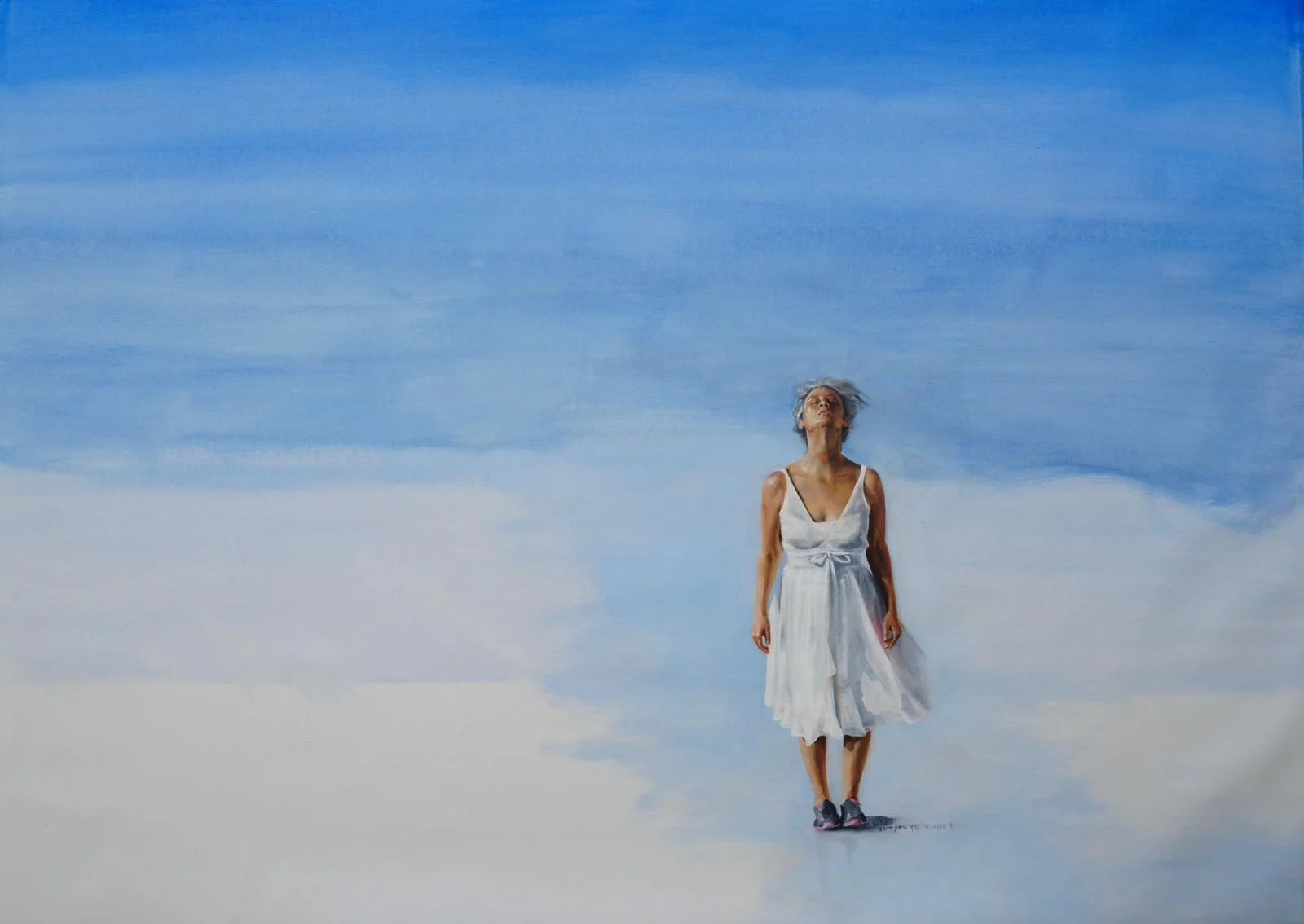
"A Meditation of Place” (Una Meditación del Lugar) Valentine Aprile. Oil on canvas/Óleo sobre lienzo. 49 x 36 in. 126 x 92 cm. 2026.
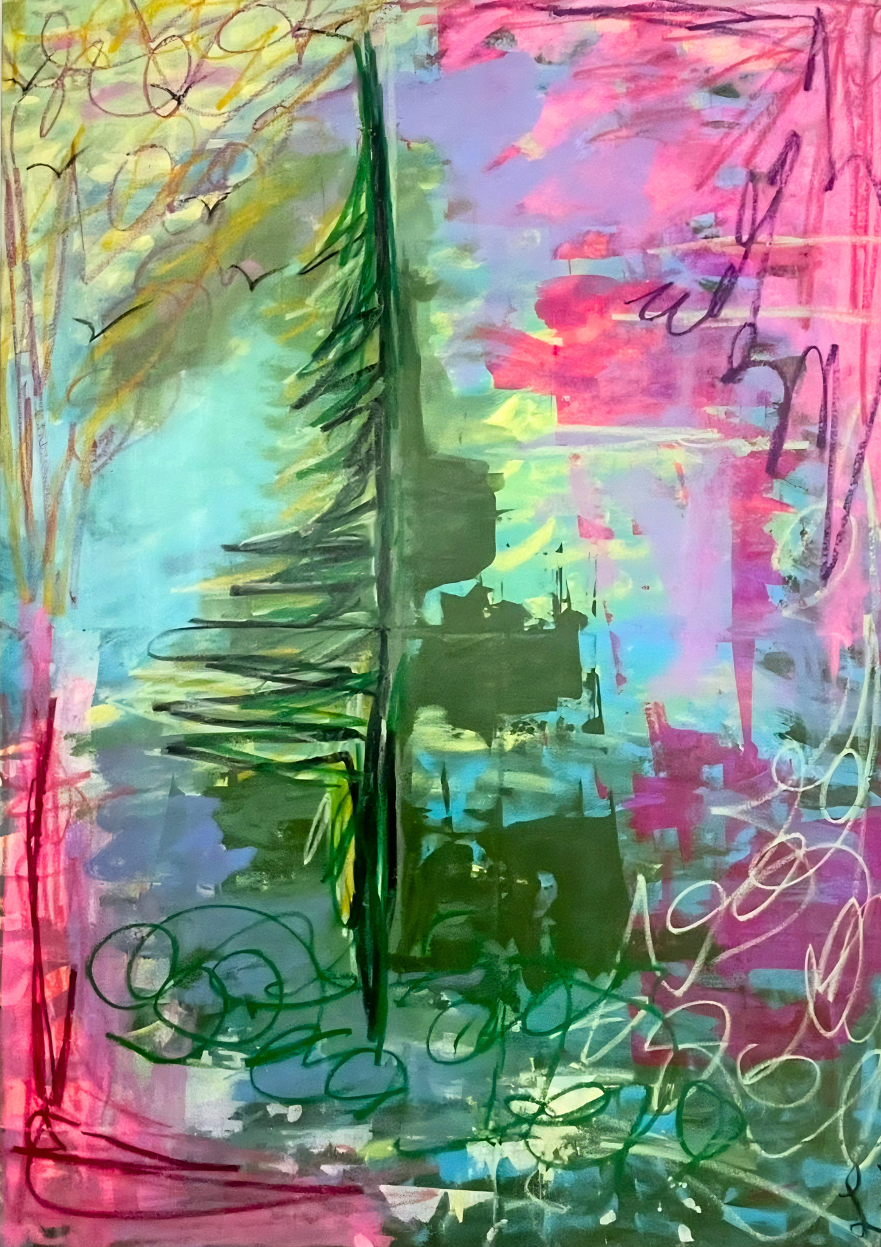
"Pino Real” Libia Rocha. Acrylic and oil pastels on canvas/Acrílico y pasteles sobre lienzo. 36 x 49 in. 92 x 126 cm. 2026.
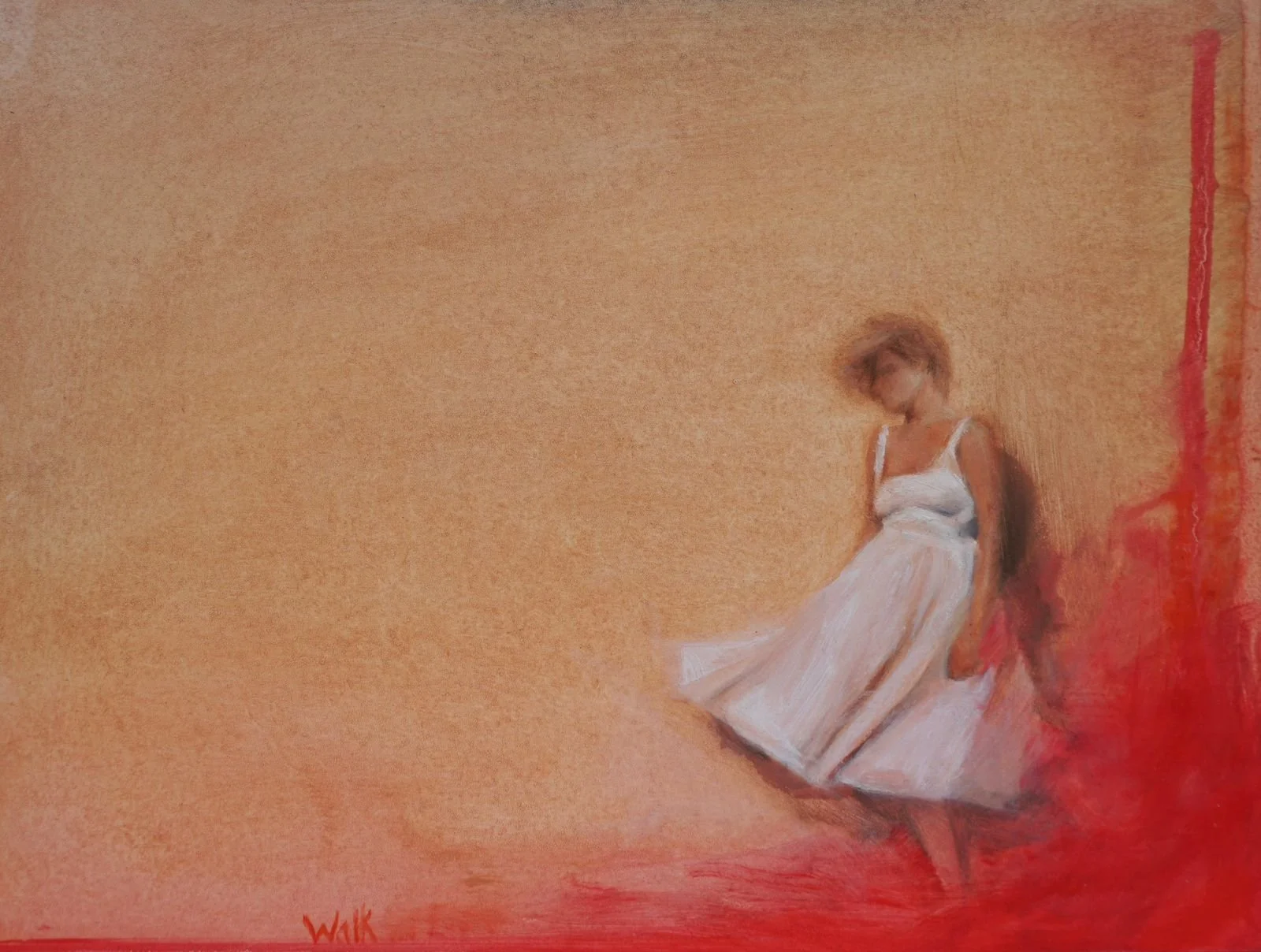
"La Calle Misión Santa Lucía” Valentine Aprile. Oil on panel/Óleo sobre madera. 2026.
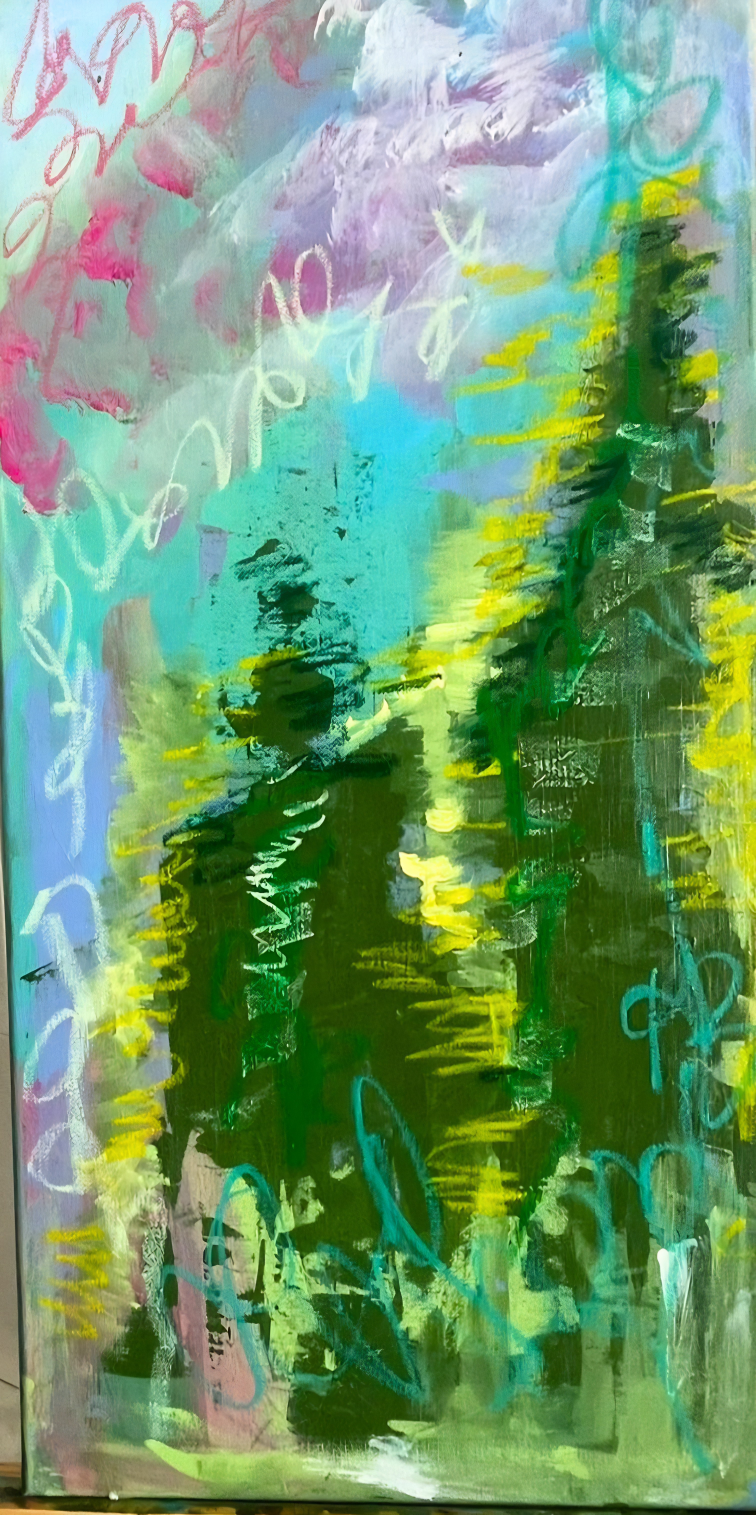
"Sierra Madre” Libia Rocha. Acrylic and oil pastels on canvas/Acrílico y pasteles sobre lienzo. 12 x 24 in. 30 x 60 cm. 2026.
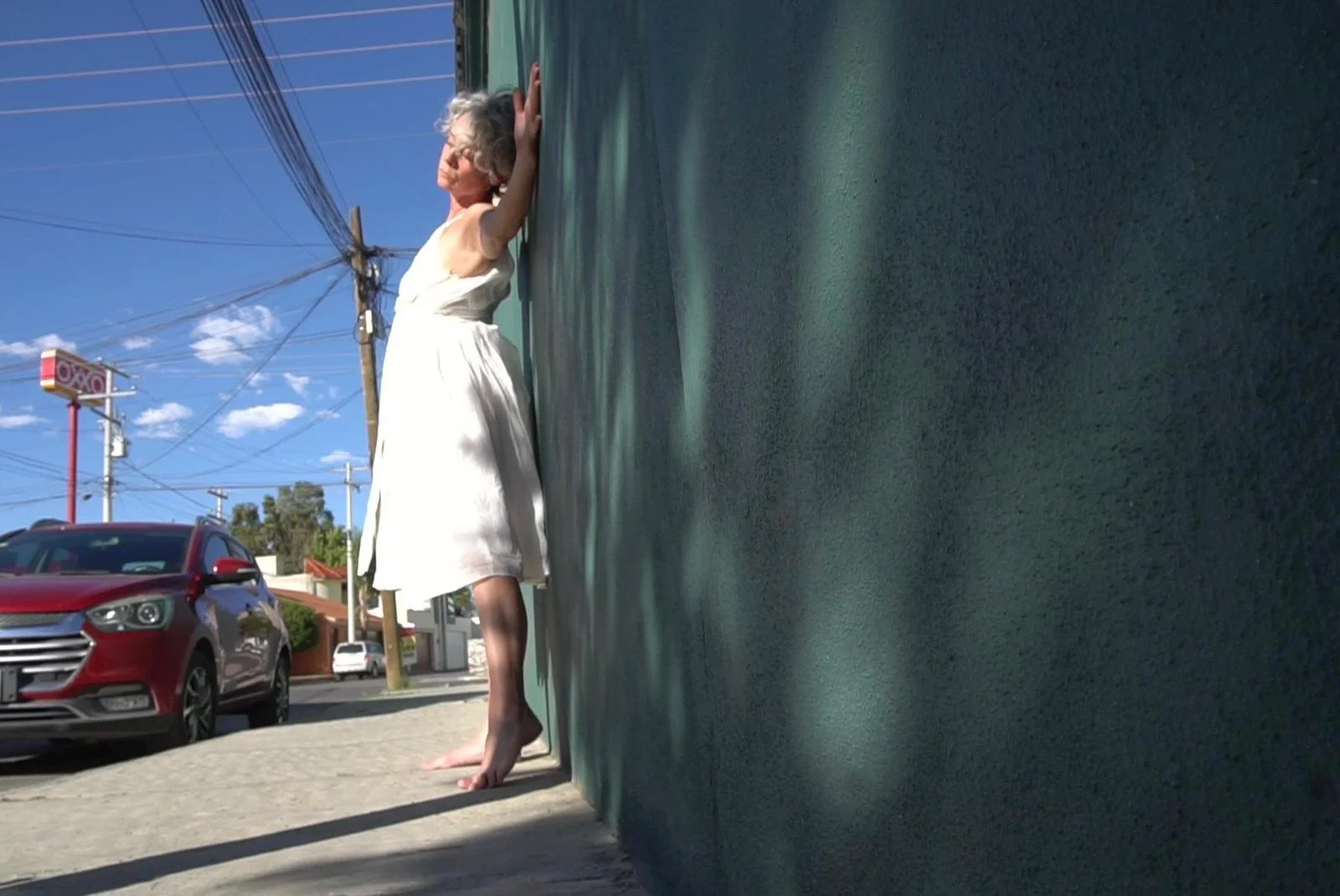
Still from movement exploration contemplating place and the circle of time and memory. Fotograma tomado de una exploración del movimiento que contempla el lugar y el círculo del tiempo y la memoria.
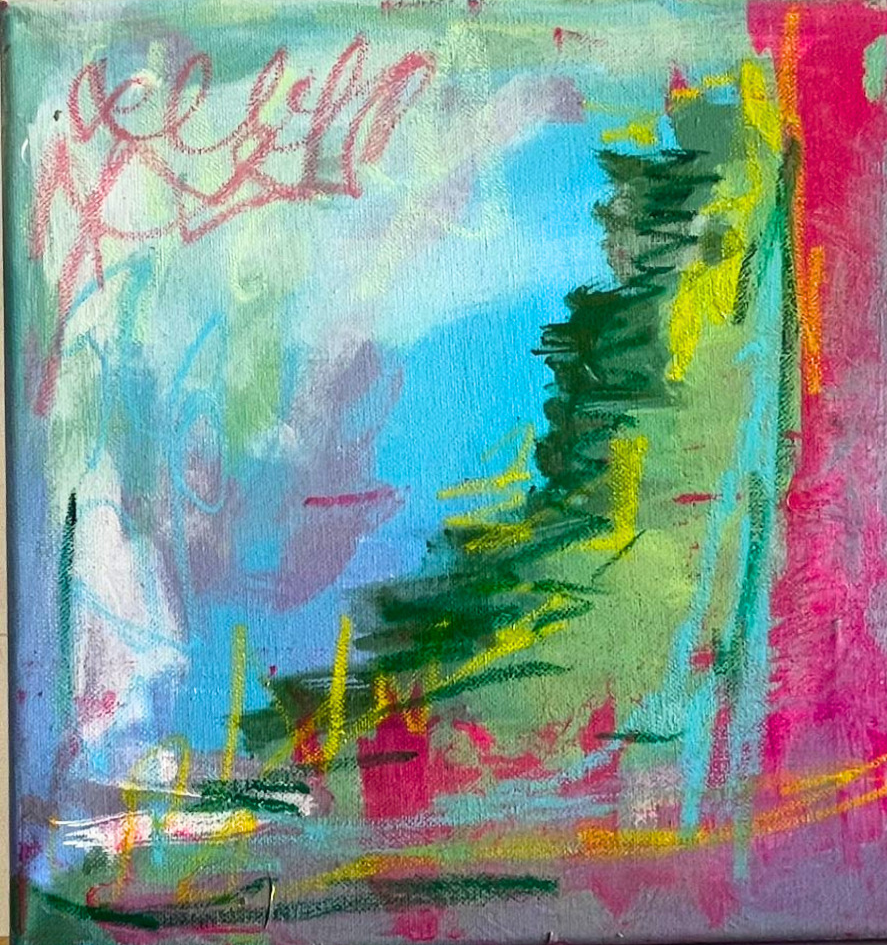
"Atardecer en Durango” Libia Rocha. Acrylic and oil pastels on canvas/Acrílico y pasteles sobre lienzo. 12 x 12 in. 30 x 30 cm. 2026.